Introduction
Three-quarters of organizations worldwide exceeded their cloud budgets in 2025. That's not a typo. With cloud spending expected to increase 28% this year and organizations exceeding budgets by 17%, the traditional annual budgeting playbook has become obsolete in environments where infrastructure scales by the minute. Cloud budget enforcement has evolved from reactive cost tracking to proactive, automated guardrails that prevent overruns before they crater quarterly earnings.
The numbers tell a stark story. Public cloud services reached $723.4 billion in 2025, up from $595.7 billion in 2024. Yet an estimated 21% of enterprise cloud infrastructure spend is wasted on underutilized resources, translating to roughly $44.5 billion in preventable losses. When half your organization doesn't know where cloud money actually goes, you don't have a visibility problem. You have an enforcement problem.
The Real Cost of Budget Drift
Budget overruns don't announce themselves. They accumulate through thousands of micro-decisions made by development teams spinning up instances, data scientists provisioning GPU clusters, and product managers launching A/B tests that never get shut down. 84% of organizations cite managing cloud spend as their top challenge, yet most still rely on month-end billing statements to understand what happened weeks ago.
Traditional budgeting assumes predictability. Cloud spending thrives on elasticity. This mismatch creates a dangerous gap. Only 30% of companies can accurately attribute their cloud costs. When three-quarters of your organization can't connect spending to business outcomes, annual budget planning becomes an expensive guessing game.
The waste compounds across multiple dimensions. 66% of organizations report wasted spend due to idle or underused resources. Development environments running 24/7. Reserved instances purchased for workloads that migrated to containers. Storage tiers holding data nobody accessed in two years. Each waste stream operates independently, but collectively they drain 30-32% of cloud budgets according to recent industry analysis.
Budget Enforcement vs. Cost Optimization: Understanding the Difference
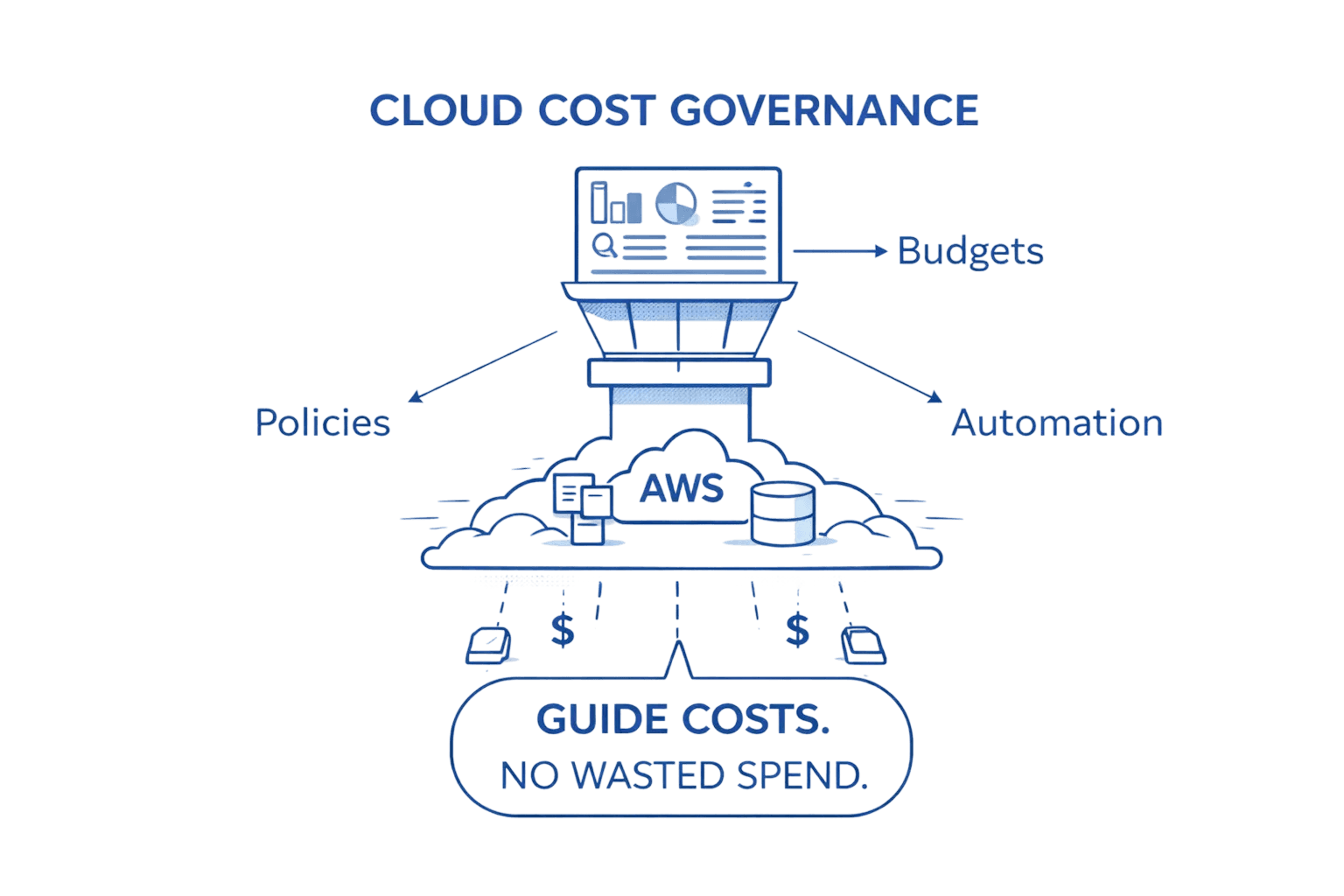
Cloud budget enforcement prevents unauthorized spending through automated policies and real-time controls. Cost optimization identifies opportunities to reduce existing waste. The distinction matters because they serve different functions in your financial governance stack.
Think of enforcement as your first line of defense. Before a developer launches 50 EC2 instances for a load test, enforcement policies check against team budgets and flag potential overruns. Optimization comes later, analyzing historical patterns to recommend rightsizing those instances once they're running.
Most organizations focus exclusively on optimization while ignoring enforcement. They hunt for savings after spending spirals out of control. This reactive approach explains why 50% of organizations exceeded their cloud budget despite having cost management tools in place. You can't optimize your way out of structural governance gaps.
Key Differences at a Glance:
Aspect | Budget Enforcement | Cost Optimization |
Timing | Proactive, pre-deployment | Reactive, post-deployment |
Focus | Preventing overruns | Reducing waste |
Method | Automated policies, alerts | Analysis, recommendations |
Impact | Immediate spending control | Gradual cost reduction |
Ownership | FinOps + Engineering | FinOps teams |
Core Components of Real-Time Budget Enforcement
Effective cloud budget enforcement requires four foundational elements working in concert. First, real-time monitoring provides continuous visibility into spending patterns as they develop, not weeks later when bills arrive. Second, automated policy frameworks encode spending rules that execute without human intervention. Third, multi-dimensional budget allocation creates granular controls across teams, projects, and environments. Fourth, dynamic alerting systems notify stakeholders before small variances become budget crises.
Real-time monitoring shifts the conversation from "what happened" to "what's happening right now." When compute spending jumps 40% on Tuesday morning, you know within hours instead of discovering it on the first of next month. This temporal compression gives teams response windows measured in hours, not billing cycles.
Policy automation removes manual approval bottlenecks while maintaining control. Development teams get immediate feedback when resource requests exceed budget thresholds. Finance teams set boundaries without becoming deployment gatekeepers. The system enforces rules consistently across thousands of daily provisioning decisions.
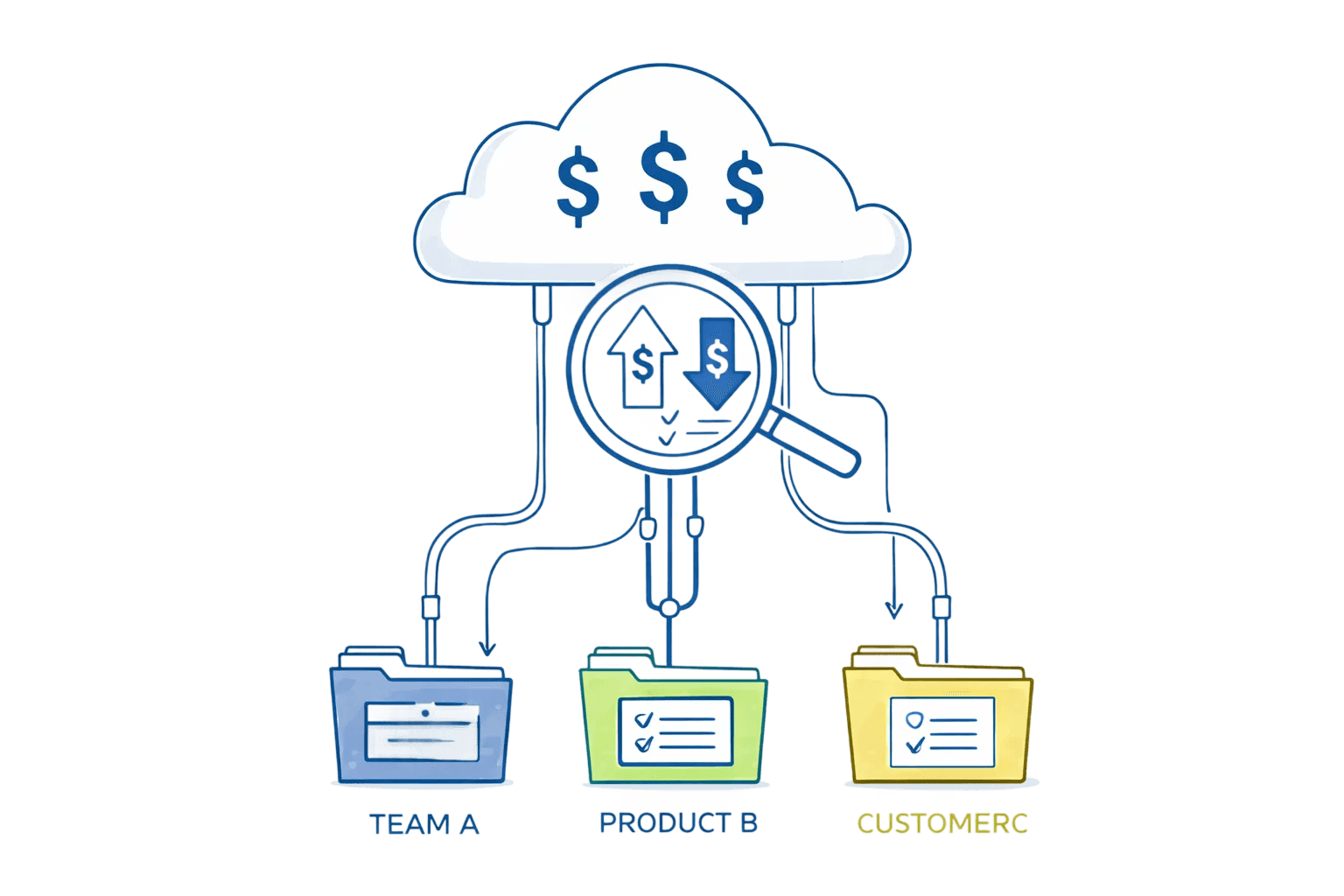
Multi-dimensional budgets recognize that organizations don't spend money as monoliths. Engineering teams have different consumption patterns than data science teams. Production environments require different controls than sandbox environments. Budget enforcement frameworks must accommodate these distinctions without creating administrative overhead.
Implementing Budget Guardrails Without Slowing Innovation
Budget guardrails act as automated boundaries that prevent spending from exceeding predefined limits while allowing teams operational autonomy. The key word is "automated." Manual approval workflows create bottlenecks that slow development velocity. Automated guardrails provide instant decisions based on policy.
Start with graduated controls based on risk profiles. Non-production environments get flexible budgets with monitoring. Production systems receive stricter limits and automated scaling constraints. High-priority projects operate within generous boundaries while experimental workloads face tighter restrictions.
Consider a data science team requesting GPU instances for model training. Traditional approval processes require tickets, manager sign-offs, and waiting. Automated guardrails check the request against team budgets, project allocations, and historical spending patterns. If within bounds, provisioning proceeds immediately. If exceeding thresholds, the system triggers alerts while providing self-service options to adjust timelines or reduce resource scope.
Budget Guardrail Implementation Tiers:
Monitoring Only - Track spending, send weekly reports (suitable for low-risk environments)
Soft Limits - Alert on threshold breaches, allow overrides (development teams)
Hard Limits - Block provisioning beyond budget (shared resources)
Dynamic Limits - Adjust boundaries based on utilization patterns (production workloads)
Real-Time Monitoring and Anomaly Detection in Practice
The shift from monthly cost reviews to continuous anomaly detection represents a fundamental change in cloud financial management. AI-powered monitoring systems detect unusual spending patterns within hours, enabling response before small issues metastasize into budget crises.
Anomaly detection works by establishing baseline spending patterns for each service, team, and project. When actual consumption deviates significantly from expected patterns, the system flags potential issues for investigation. A database instance that typically costs $500 daily suddenly hitting $2,000 triggers immediate alerts, not month-end surprises.
The sophistication lies in separating signal from noise. Legitimate business spikes shouldn't generate false alarms. A retail company's compute costs tripling during Black Friday week isn't an anomaly. The same spike in February probably is. Context-aware detection reduces alert fatigue while catching genuine problems.
52% of engineering leaders report that the disconnect between FinOps and development teams leads to wasted spend. Real-time visibility bridges this gap. When developers see the immediate cost impact of their architectural decisions, behavior changes. The feedback loop shrinks from 30 days to 30 minutes.
Multi-Dimensional Budget Allocation at Scale
Effective cloud budget enforcement requires allocation across multiple dimensions: teams, projects, environments, applications, and cloud providers. Hierarchical budget structures enable both top-down control and bottom-up transparency.
Start with organizational structure. Total cloud budget flows down through business units, departments, teams, and individual projects. Each level sets constraints for levels below while maintaining visibility upward. Engineering gets $2M quarterly. Platform team receives $800K of that. The database project operates within $200K of platform's allocation.
Add environmental segmentation. Production workloads deserve different treatment than development sandboxes. Allocate 60-70% of budgets to production, 20-25% to staging, and 10-15% to development. These ratios prevent the common scenario where test environments consume more resources than customer-facing systems.
Layer in temporal controls. Monthly budgets work for steady-state workloads. Quarterly budgets suit projects with variable consumption. Annual budgets enable long-term capacity planning. The right granularity depends on workload predictability and business planning cycles.
Cross-cloud allocation completes the picture. Multi-cloud strategies require unified budget visibility across AWS, Azure, and GCP. Teams shouldn't arbitrage cloud providers to circumvent budget limits. Centralized allocation with provider-agnostic enforcement prevents this gaming.
Automation and Policy-as-Code for Consistent Enforcement
Manual budget tracking becomes impossible at scale. Organizations running thousands of resources across multiple clouds need automated policy enforcement that executes consistently without human intervention.
Policy-as-code applies infrastructure-as-code principles to budget management. Define spending rules in version-controlled templates that deploy automatically. When new projects spin up, budget policies attach without manual configuration. Changes to policy definitions propagate across all resources through standard deployment pipelines.
Example policy: "Development environments cannot provision instances larger than 8 vCPUs or exceed $5,000 monthly spending." This rule, defined once, applies to every development resource across every cloud provider. Developers attempting to launch 32 vCPU instances receive immediate rejection with alternative options.
Automation reduces human error and ensures consistent application. Finance teams don't need to manually review each provisioning request. Budget policies execute in milliseconds, providing instant feedback while maintaining governance.
Measuring Budget Enforcement Success
Budget enforcement effectiveness requires clear metrics beyond simple spending reduction. Track budget variance as primary indicator. Organizations with mature enforcement programs typically achieve variance under 5% between planned and actual spending. Those without enforcement see 15-25% variance or higher.
Monitor enforcement response time. How quickly do alerts reach stakeholders after threshold breaches? Best-in-class organizations detect anomalies within 4 hours and notify responsible teams within 30 minutes. Delayed detection undermines the entire enforcement model.
Measure policy compliance rates. What percentage of resource provisioning requests adhere to budget policies on first attempt? High compliance indicates well-designed policies that balance control with operational needs. Low compliance suggests overly restrictive rules that teams work around.
Track developer satisfaction alongside financial metrics. Effective enforcement accelerates development by providing clear boundaries and immediate feedback. If budget controls create friction that slows deployment velocity, reassess policy design.
How Opsolute Enables Proactive Budget Enforcement
Organizations implementing cloud budget enforcement face complexity across multiple clouds, teams, and resource types. Opsolute's Budget Guardrails feature provides unified budget enforcement across AWS, GCP through a single platform.
The system enables multi-dimensional budget allocation by account, team, environment, and product. Real-time monitoring tracks spending against these allocations with configurable alert thresholds. When teams approach budget limits, automated notifications provide early warning before overruns occur.
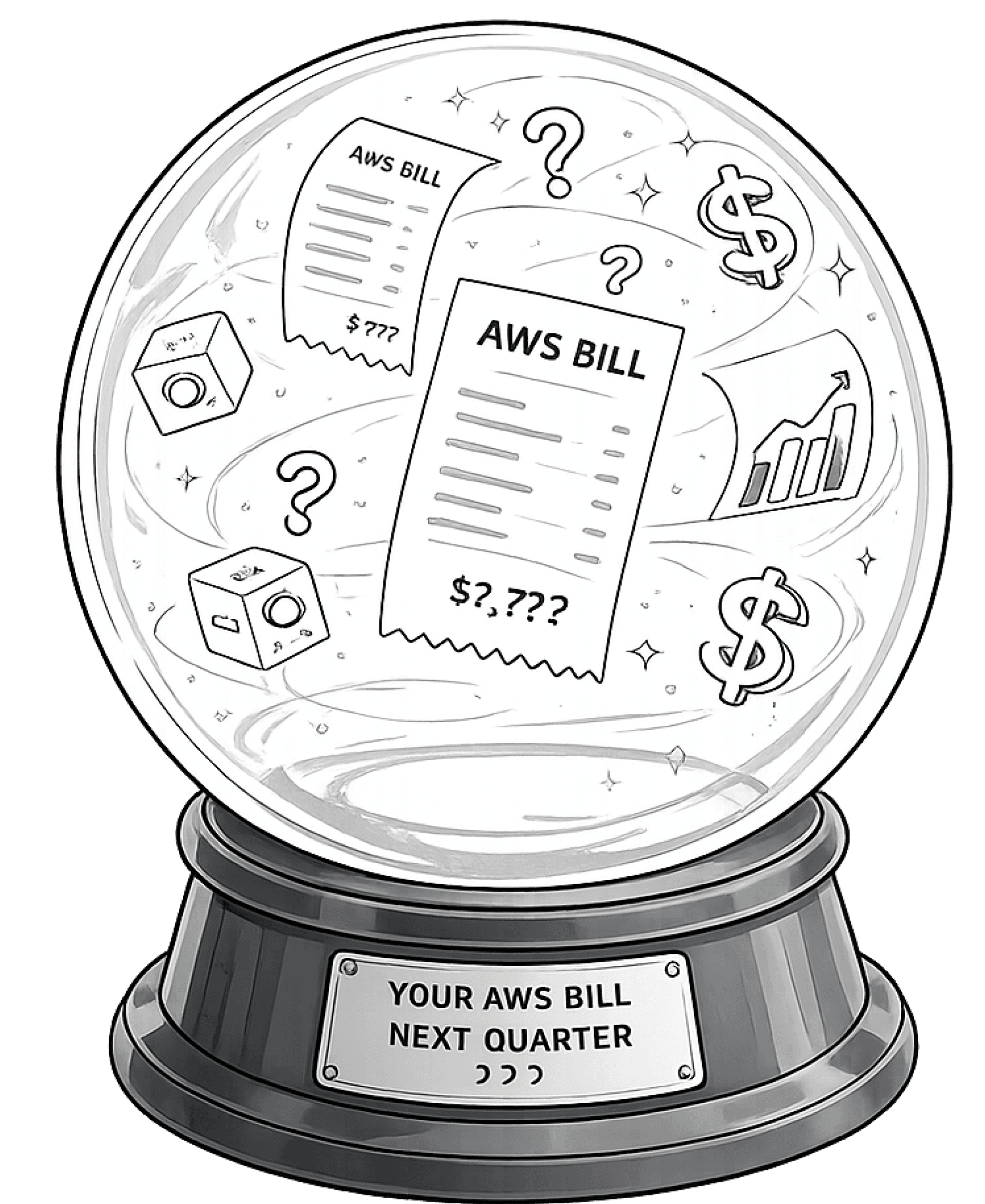
Intelligent forecasting capabilities predict budget breaches before they happen by analyzing historical consumption patterns and current spending trajectories. Teams see projected month-end costs in real-time, enabling proactive adjustments rather than reactive damage control.
The platform's granular budget tracking extends to individual resources, services, and tags. Finance teams gain visibility into exactly where money flows without waiting for consolidated monthly reports. Engineering teams operate with autonomy within defined guardrails, maintaining development velocity while respecting financial boundaries.
Taking Action on Budget Enforcement
Start with baseline visibility. Understand current spending patterns across teams, projects, and environments. Identify the 20% of resources driving 80% of costs. These become your initial enforcement targets.
Implement graduated controls. Begin with monitoring and alerts for low-risk environments. Add soft limits with override capabilities for medium-risk workloads. Reserve hard enforcement for high-risk production systems and shared resources.
Automate progressively. Start with manual review processes to establish patterns, then codify repeated decisions into automated policies. As confidence builds, expand automation scope while maintaining human oversight for edge cases.
Budget enforcement isn't about restriction. It's about enabling informed decisions at cloud speed. When teams understand spending implications in real-time and operate within clear boundaries, innovation accelerates while financial discipline improves. That's the balance organizations need to capture cloud's full potential without sacrificing fiscal responsibility.
Frequently Asked Question (FAQ)
Q: What tools automate cloud budget enforcement?
A: Budget enforcement tools combine real-time spend monitoring with policy-as-code to block or flag provisioning before it exceeds a limit, rather than just reporting overspend after the fact. Look for multi-dimensional budgets (team, environment, account), graduated controls (soft limits vs. hard blocks), and automated alerting tied directly into deployment pipelines.
Q: Can budget enforcement tools send real-time alerts across multiple cloud providers?
A: Yes. Modern budget enforcement platforms unify AWS, Azure, and GCP spend into one alerting layer, so a threshold breach on any provider triggers a notification within hours instead of surfacing at month-end billing.
Q: How do I automate cloud spend alerts and budget guardrails?
A: Start by defining budget thresholds at the team or account level, then connect real-time usage data (not monthly billing exports) to an alerting layer that fires at 70/85/100% of budget. The highest-leverage step is pairing alerts with an automated guardrail, like a provisioning block, so the system acts on the threshold instead of just notifying someone to act manually.