GCP's discount system works differently from AWS and Azure in one important way: part of it applies automatically, with no purchase required. Most GCP cost optimization guides bury that distinction, or worse, apply it to machine families where it doesn't actually work.
Key Highlights
GCP runs two separate automatic-eligible discount systems, Sustained Use Discounts and Committed Use Discounts, and confusing which applies to which machine family is one of the most common GCP cost optimization mistakes.
Sustained Use Discounts apply with zero purchase and zero commitment, but they don't cover every machine family, GPUs, or Cloud SQL, an eligibility gap that catches teams off guard regularly.
Committed Use Discounts trade a one- or three-year term for deeper savings than Sustained Use Discounts can reach, and Google migrated most accounts to a new spend-based CUD model in January 2026.
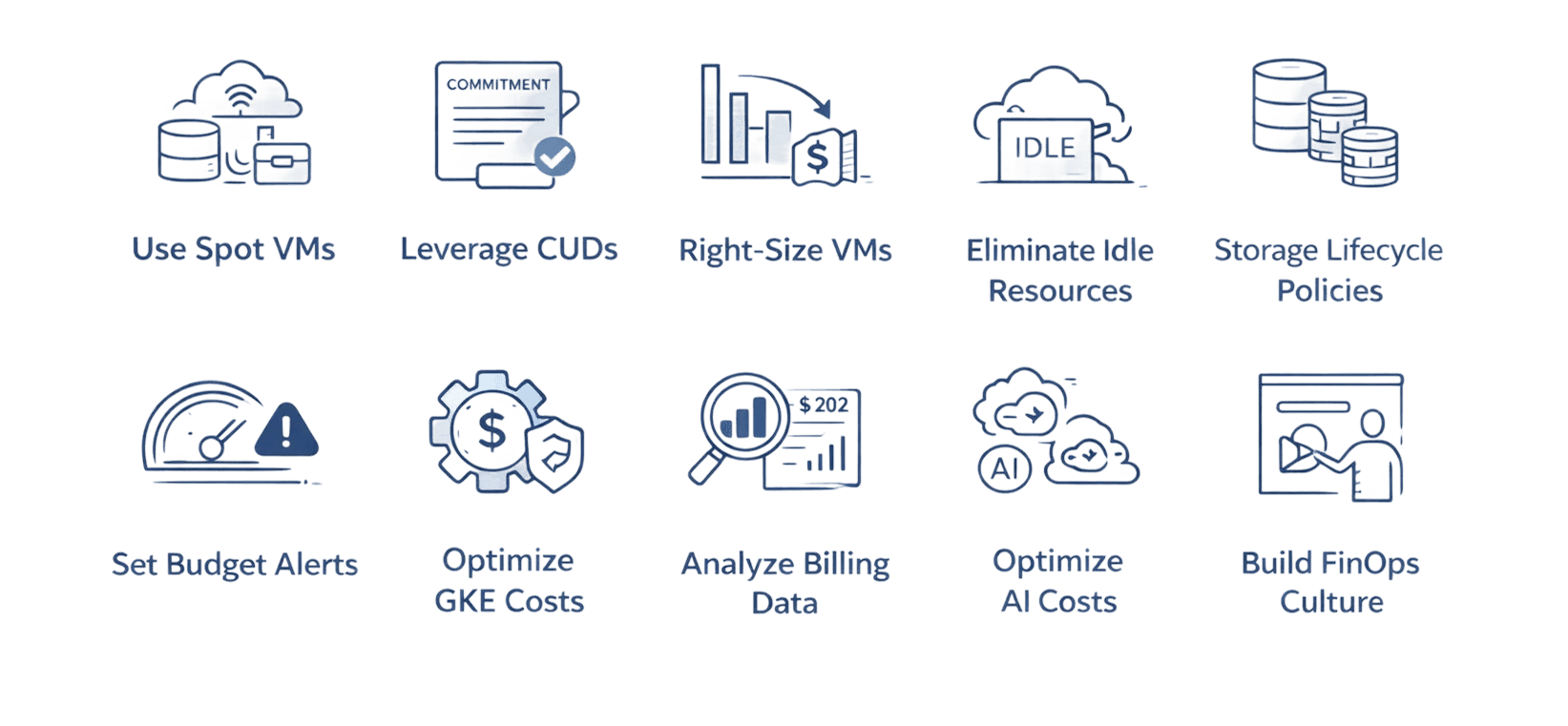
Spot VMs offer some of the steepest discounts on the platform, but only for workloads that can tolerate reclamation with roughly 30 seconds' notice.
What Are the Core GCP Cost Optimization Best Practices?
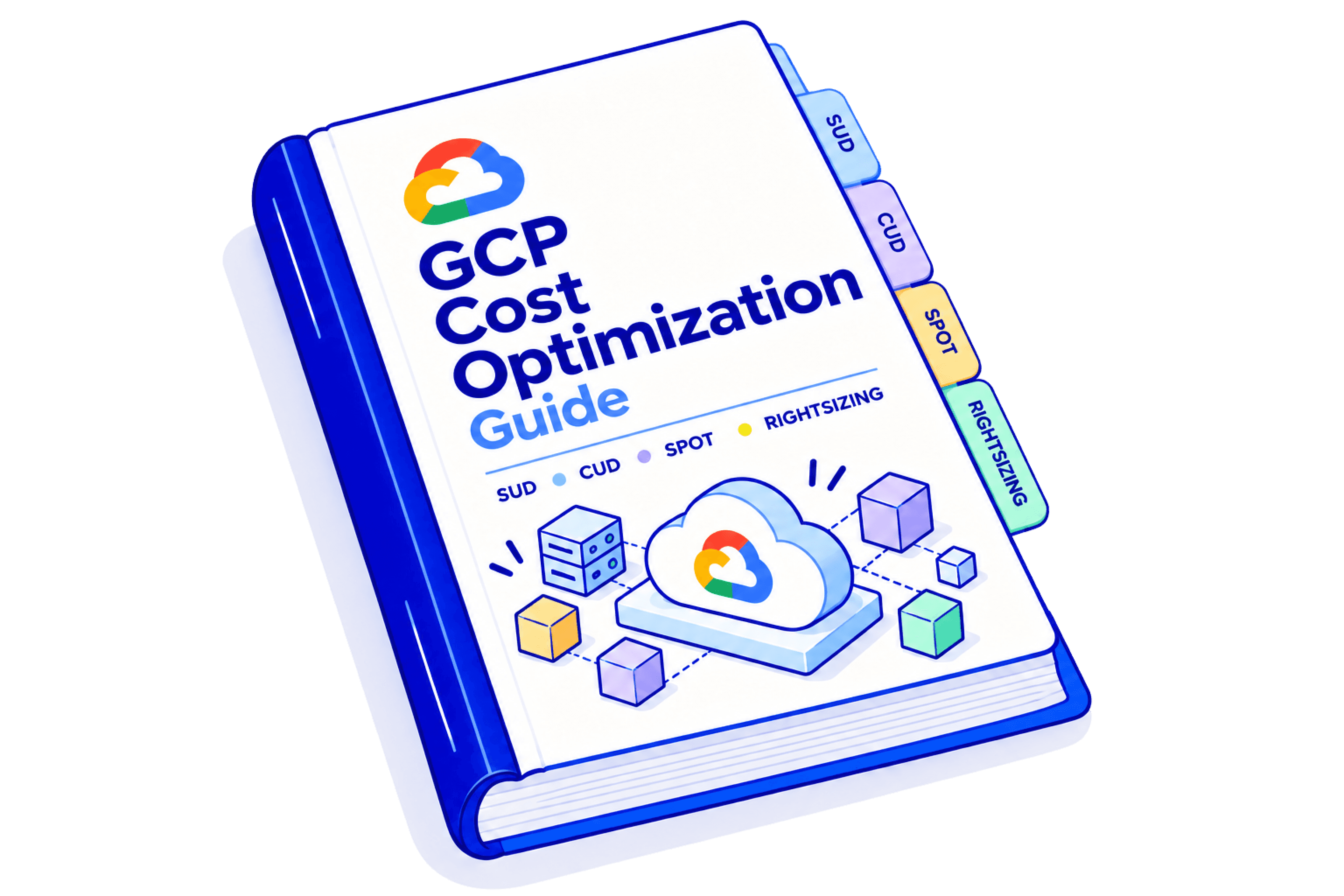
GCP cost optimization best practices center on matching Google Cloud's specific discount mechanisms, Sustained Use Discounts, Committed Use Discounts, Spot VMs, and rightsizing, to actual workload behavior, rather than applying a generic one-size-fits-all savings strategy.
The starting point isn't picking a discount; it's knowing which mechanism actually applies to a given machine family, since GCP's automatic discount doesn't cover all of them.
How Do Sustained Use Discounts Work as a GCP Cost Optimization Best Practice?
Sustained Use Discounts (SUDs) are GCP's automatic, no-commitment discount: as an eligible VM runs through more of the billing month, the discount ramps up incrementally, reaching roughly 30% off for a full month of usage. No purchase, no term, no action required; it applies simply by leaving eligible infrastructure running.
The catch, and the single most common mistake in GCP cost optimization, is assuming SUDs cover everything. They don't apply to newer machine families like E2, N4, C3, or C4; they don't apply to GPU or accelerator-optimized instances; and they don't apply to Cloud SQL at all, which requires its own, separately structured committed use discount. A team assuming SUDs are covering a modern machine family may be paying full on-demand rates without realizing it.
When Should You Use Committed Use Discounts Instead of Sustained Use Discounts?
Committed Use Discounts (CUDs) require an explicit one- or three-year commitment in exchange for meaningfully deeper savings than SUDs can reach, up to roughly 70% depending on machine family and term.
They're the right fit for genuinely stable, predictable workloads, exactly the workloads where locking in a term carries little risk. Google moved most remaining accounts from the legacy credit-based CUD model to a new spend-based model as of January 21, 2026, applying discounts directly to eligible SKU prices; it's worth checking which model your account is actually running before assuming your CUD math still holds.
What Role Do Spot VMs Play in GCP Cost Optimization Best Practices?
Spot VMs let you bid on Google Cloud capacity that hasn't been sold to other customers, with discounts reaching as high as 91% off on-demand pricing. The tradeoff is real: Google can reclaim that capacity with roughly 30 seconds' warning, which makes Spot VMs a strong fit for batch jobs, CI/CD pipelines, and fault-tolerant processing, and a poor fit for anything customer-facing that can't handle sudden termination.
How Should Rightsizing Fit Into GCP Cost Optimization?
Rightsizing on GCP follows the same principle covered in infrastructure optimization more broadly: match provisioned capacity to actual, measured utilization, using GCP's own Recommender Hub as a starting signal rather than a final answer.
This matters more on GCP than it might elsewhere, since a rightsizing decision that moves a workload onto an SUD-ineligible machine family can accidentally trade a small performance gain for a real, avoidable increase in cost.
How Do GKE and Autoscaling Change the GCP Cost Optimization Picture?
For containerized workloads, GCP cost optimization extends into Google Kubernetes Engine specifically, autoscaling node pools and mixing in Spot node pools for interruption-tolerant workloads.
This is the same attribution and utilization discipline covered in tracking the right cost optimization metrics regardless of provider; a GKE cluster autoscaling correctly still needs utilization data to prove the autoscaling is actually tuned well, not just present.
Where Does Opsolute Fit In?
Opsolute's cost intelligence today is built specifically around AWS. For organizations running GCP alongside AWS, comparing spend meaningfully across providers requires normalizing two genuinely different discount and billing structures before any cross-cloud cost decision holds up; GCP's SUD/CUD split doesn't map directly onto AWS's Reserved Instance or Savings Plan model, and treating them as equivalent is its own source of cost mistakes.
The Bottom Line
GCP cost optimization best practices reward knowing exactly which discount mechanism applies to which machine family, more than they reward picking one strategy and applying it everywhere. The teams that get the most out of GCP's pricing model are the ones checking eligibility before assuming a discount is already working in their favor.
Want your AWS spend optimized with the same level of mechanism-specific precision? Book a 30-minute demo and see how Opsolute connects billing data to the infrastructure decisions driving it.
FAQ
What are the main GCP cost optimization best practices?
The core practices center on four mechanisms: Sustained Use Discounts (automatic, no commitment), Committed Use Discounts (deeper savings for a term commitment), Spot VMs (steep discounts for interruption-tolerant workloads), and rightsizing based on actual utilization.
Do Sustained Use Discounts apply to every GCP machine type?
No. SUDs don't cover newer machine families like E2, N4, C3, or C4, don't apply to GPU or accelerator-optimized instances, and don't apply to Cloud SQL, which uses its own separate committed use discount structure.
What's the difference between Sustained Use Discounts and Committed Use Discounts?
SUDs apply automatically with no purchase, capping around 30% off. CUDs require an explicit one- or three-year commitment but unlock deeper savings, up to roughly 70%, depending on machine family and term.
Are Spot VMs a safe default for GCP cost optimization?
Only for interruption-tolerant workloads. Google can reclaim Spot VM capacity with roughly 30 seconds' notice, making them unsuitable for production or customer-facing services regardless of the discount available.