Introduction
Your engineering team just spent 200 hours building cost dashboards and implementing cleanup scripts. They found $15,000 in monthly savings. Finance is thrilled. Six months later, your AWS bill is higher than ever, and nobody can explain why. Your best engineers spend 20 hours monthly fighting spreadsheets instead of shipping product.
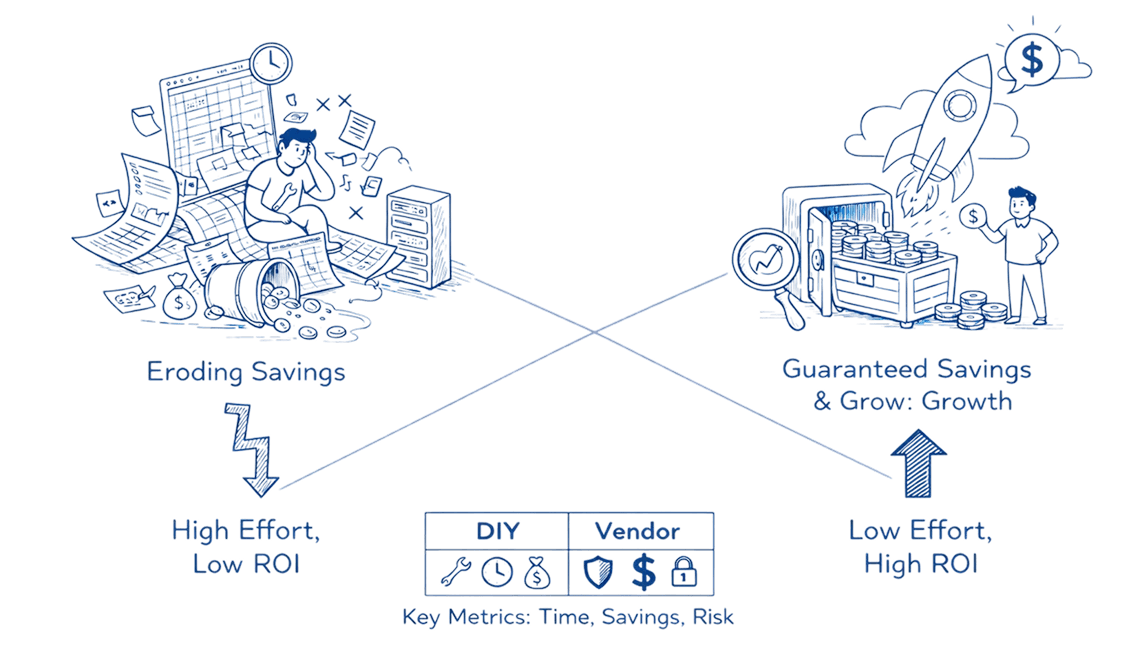
This is the DIY optimization trap, ad-hoc cost dashboards, manual cleanup scripts, spreadsheet-based Reserved Instance planning, and part-time engineer attention instead of dedicated cost optimization in cloud computing practices.
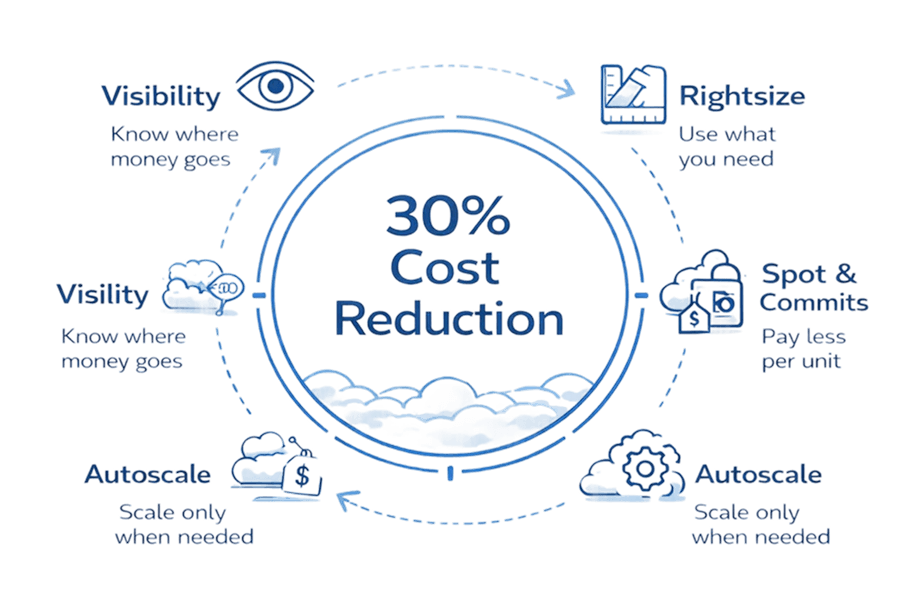
Most cloud environments that have not been actively tuned contain 15 to 35 percent unnecessary spend.
Source: Flexera State of the Cloud Report 2025; industry analysis
On a $25,000 AWS bill, that often means several thousand dollars in recoverable savings. However, the easy fixes such as stopping idle instances or cleaning up storage usually deliver only 15 to 20 percent of the total savings potential.
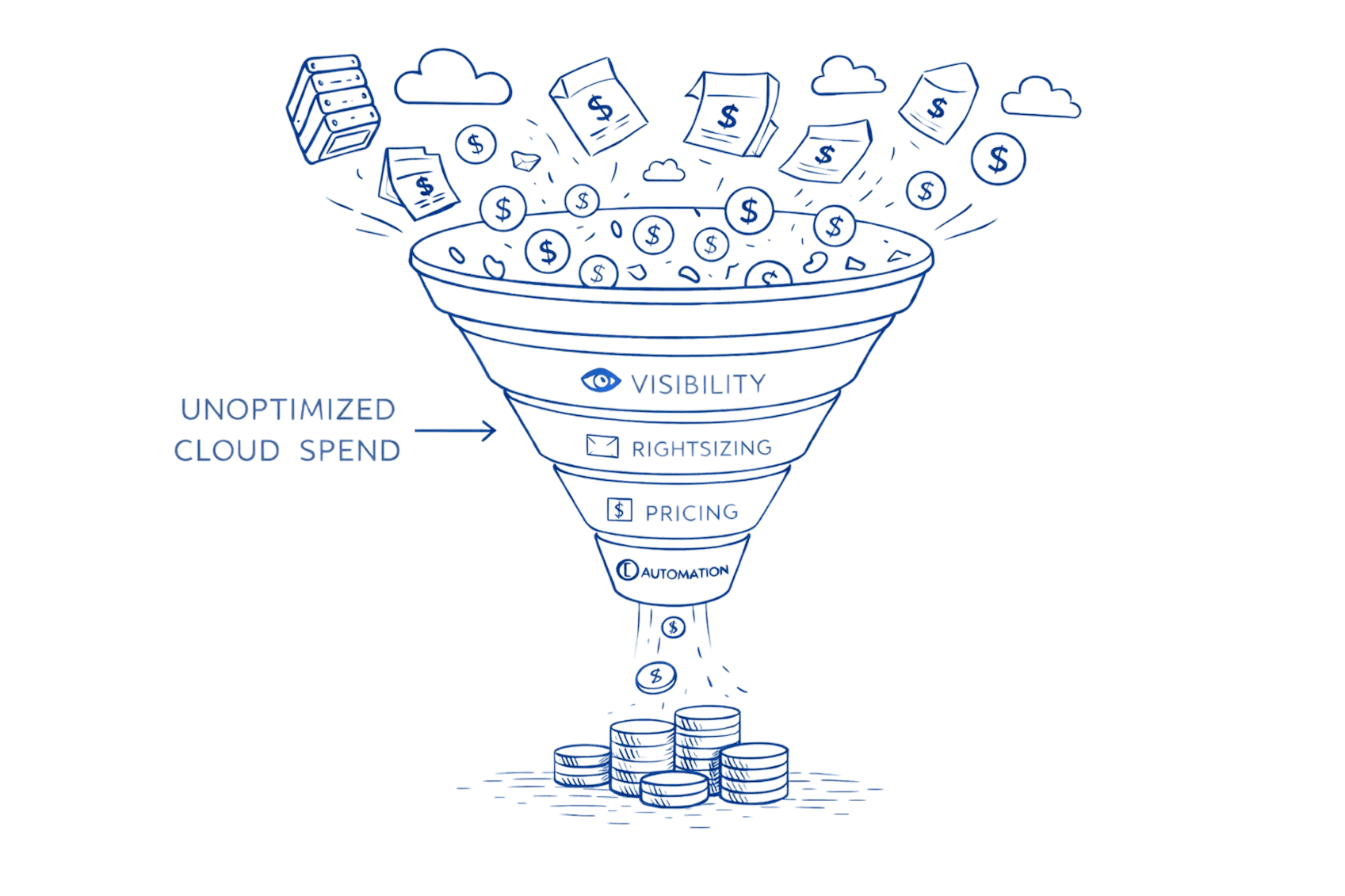
The remaining 80 percent comes from deeper optimization work such as commitment strategy, right-sizing, real-time anomaly detection, and ongoing governance, which typically require dedicated cloud cost optimization tools most teams do not have the time or expertise to maintain on their own.
This guide exposes why DIY fails if not done right, reveals hidden costs, and shows how guaranteed savings programs deliver 3 to 5 times better results with zero engineering burden.
Key Highlights :
Most AWS environments contain 15 to 35 percent unnecessary spend waiting to be recovered
DIY cost optimization delivers only 15 to 20 percent of true savings potential because deeper tasks like commitment management, rightsizing, and governance require dedicated FinOps operations
Engineering-led optimization drains 300 to 800 hours annually costing over $120,000 in lost productivity
Commitment risk is the number one place companies bleed money with 25 to 35 percent of RIs and Savings Plans going unused
Vendor-backed insured commitment programs deliver 3 to 5 times higher savings with zero engineering burden
Guaranteed savings platforms detect anomalies in real time, maintain 98 to 100 percent commitment utilization, and ensure savings do not erode after 60 to 90 days
Companies with more than $100,000 monthly AWS spend gain 2x better financial outcomes through vendor programs compared to DIY approaches
Quick Reality Check: DIY vs Vendor Programs
Metric | DIY Approach | Vendor Program |
Engineering Time (Year 1) | 300–800 hours | 10–20 hours oversight |
Net Savings ($150K/mo spend) | 15–22% | 25–40% |
Commitment Utilization | 65–75% | 98–100% |
Time to First Savings | 60–90 days | 7–14 days |
Savings Sustainability at 12 Months | 40–60% erodes | 95–100% maintained |
The 30-Minute Reality Check: Why You Need Expert Help
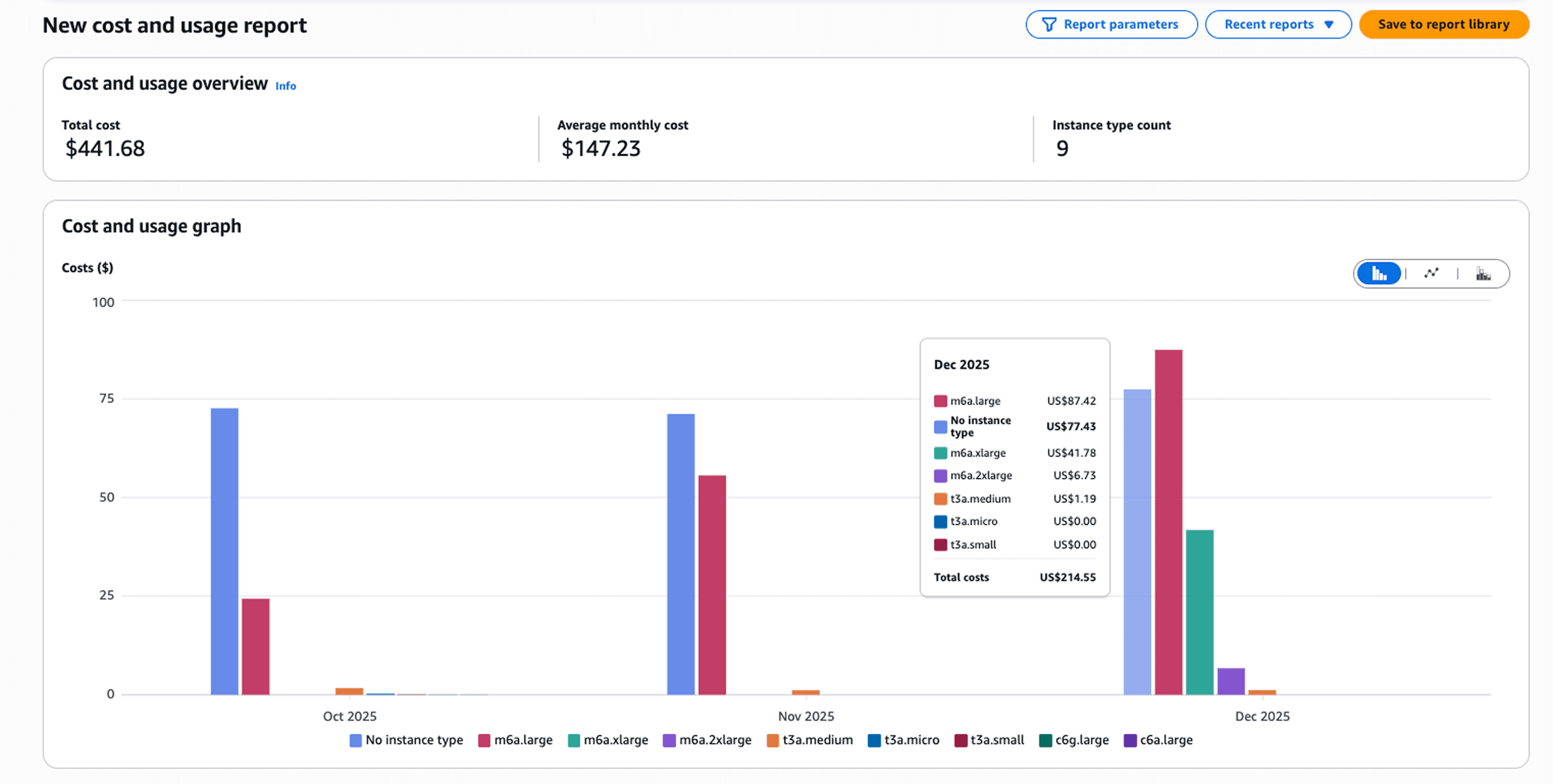
Run this diagnostic to reveal both immediate savings and why sustaining them is impossible without dedicated FinOps resources.
Find Idle EC2 Instances (15 minutes)
Identify instances with CPU below 5%:
aws cloudwatch get-metric-statistics \ |
Source: AWS CloudWatch CLI Documentation, https://docs.aws.amazon.com/cli/latest/reference/cloudwatch/
Typical finding: 20 to 40% of instances are idle or underutilized
Source: Cloud waste analysis across enterprise environments, 2024-2025
Reality check: Finding idle instances takes 15 minutes. Building schedules, implementing automation, handling team complaints, and maintaining this system? That requires 40 to 60 hours initially, then 10 to 15 hours monthly ongoing.
Orphaned EBS Volumes (10 minutes)
aws ec2 describe-volumes \ |
Source: AWS EC2 CLI Documentation, https://docs.aws.amazon.com/cli/latest/reference/ec2/
Typical finding: $1,200 to $2,500/month in forgotten storage
Source: Analysis of unattached EBS volumes across customer environments
You found orphaned volumes. Now multiply this across 8 AWS regions, 12 environments, 40 teams who constantly create and forget resources. Without automated enforcement, these reaccumulate within weeks.
S3 Lifecycle Policies (20 minutes)
{ |
Source: AWS S3 Lifecycle Configuration Documentation, https://docs.aws.amazon.com/AmazonS3/latest/userguide/object-lifecycle-mgmt.html
Potential savings: 40 to 60% reduction on storage
Source: AWS S3 storage class pricing differentials, 2025
You can implement lifecycle policies in 20 minutes for one bucket. But you have 200 buckets across multiple accounts. Some contain compliance data with seven-year retention. Others have application dependencies on specific storage classes. Who maintains the matrix? Who updates policies when requirements change?
The pattern: Each quick win requires ongoing monitoring, policy enforcement, exception handling, and team education. Without dedicated FinOps resources, savings evaporate within 60 to 90 days.
The Hidden Costs of DIY That Finance Never Sees
Engineering Time: The $120,000 Invisible Expense
The median fully-loaded cost of a senior cloud engineer is $180,000 annually.
Source: Levels.fyi and ZipRecruiter salary data for cloud engineers, 2024-2025
When you pull engineers from product development to fight cloud costs:
Initial Build (Months 1-3):
Cost visibility dashboards: 120 hours
Automated cleanup: 80 hours
Rightsizing analysis: 60 hours
Governance policies: 40 hours
Total: 300 hours = $54,000
Ongoing Maintenance (Monthly):
Analyzing reports: 12 hours
Investigating anomalies: 8 hours
Updating automation: 6 hours
Team training: 6 hours
Total: 32 hours/month = $67,200 annually
Source: Time investment analysis for FinOps implementation, industry surveys 2024
You just spent $121,200 to save $40,000. The math does not work.
Opportunity Cost: What You Did Not Build
Every hour on cost optimization is an hour not spent on features that drive revenue. This translates to:
2 to 3 major features delayed per quarter
Slower time-to-market
Competitive positioning erosion
Reduced engineering morale (nobody became an engineer to optimize S3 buckets)
The FinOps Foundation's 2024 report found engineers spending over 20% of time on cost optimization show 34% lower job satisfaction and 28% higher attrition.
Source: FinOps Foundation State of FinOps Report 2024, https://data.finops.org/
You are burning out your best people on non-strategic work.
The Commitment Management Trap
Reserved Instances and Savings Plans deliver 30 to 72% discounts but require accurate three-year usage predictions.
Source: AWS Reserved Instances and Savings Plans pricing documentation, 2025
Get it wrong and face two devastating outcomes:
Under-commitment: Leave 40 to 60% of available savings on the table
Over-commitment: Lock into $100,000 in three-year commitments, then usage drops. Organizations routinely waste $30,000 to $80,000 annually on unutilized commitments.
Source: Analysis of commitment utilization rates across enterprise AWS accounts
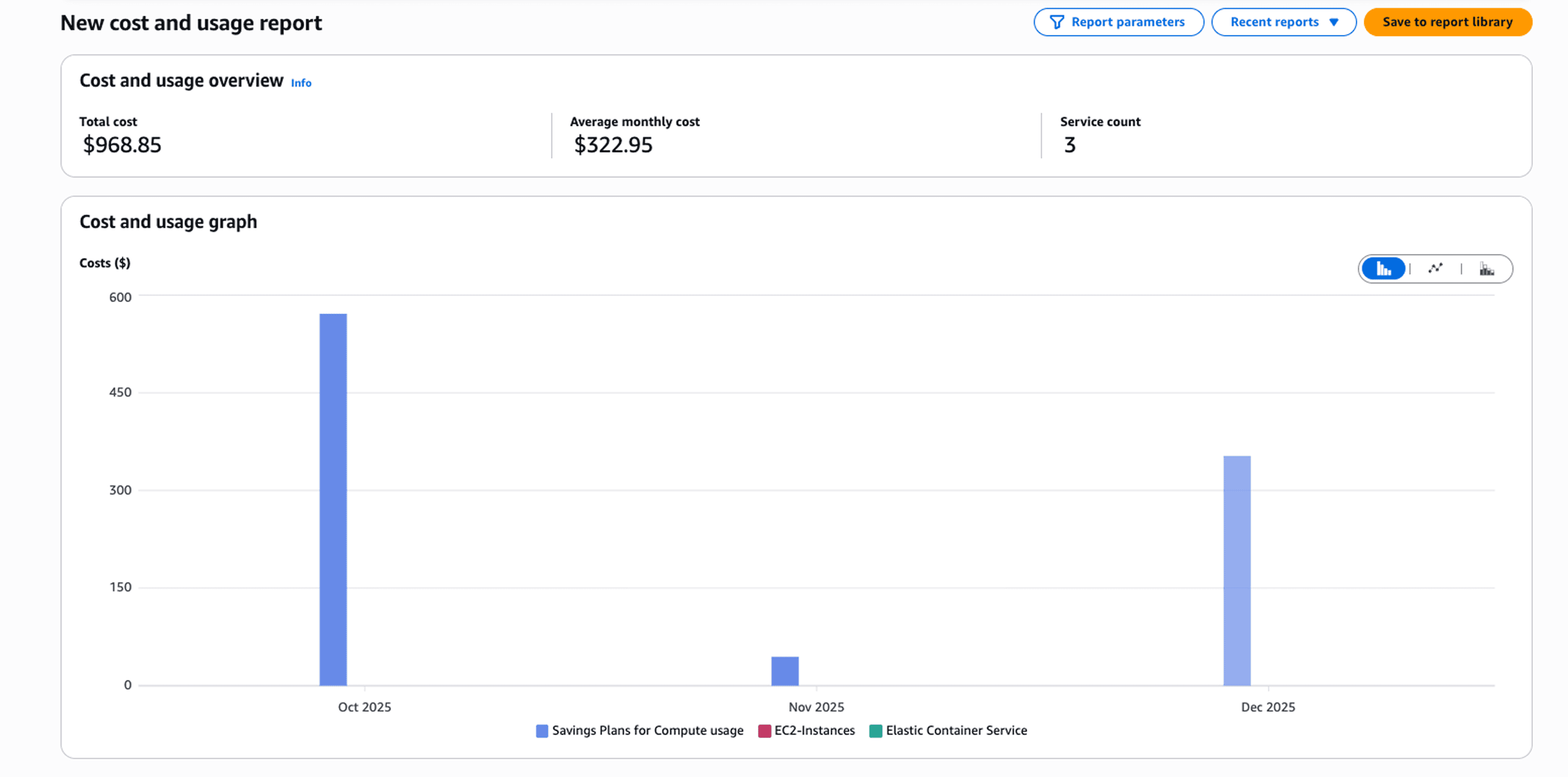
Manual commitment management fails because cloud environments are dynamic. Application teams migrate to Kubernetes, requiring dedicated EKS Cost Optimization, serverless adoption spikes, and AI workloads shift patterns. By the time you analyze last quarter to make this quarter's decisions, your data is outdated.
Vendor advantage: Companies like Opsolute use machine learning analyzing real-time usage across hundreds of environments. They purchase "insured commitments" guaranteeing utilization, transferring all risk away from you. When usage drops, they absorb cost. When it spikes, they automatically adjust coverage.
Data Complexity: 14.6 Quadrillion Monthly Data Points
A single AWS Cost and Usage Report for mid-sized companies contains 40 to 60 million rows requiring:
Ingestion from multiple accounts and regions
Normalization across different service billing formats
Allocation to teams, applications, customers using structured Top-Down vs Bottom-Up Cloud Cost Allocation models
Anomaly analysis and optimization opportunities
Executive-friendly dashboards
Source: AWS Cost and Usage Report structure analysis; typical mid-size enterprise data volumes
Ask yourself: Is cost visibility your core differentiator? If not, why divert engineering resources to build what vendors offer off-the-shelf?
How Guaranteed Savings Programs Work (And Why They Succeed)
Vendor-led programs operate on fundamentally different models delivering 3 to 5 times better results than DIY.
Phase 1: Baseline Assessment (Week 1)
Vendors ingest 90 days of Cost and Usage Reports applying sophisticated normalization:
Seasonal adjustment (exclude holiday spikes, migrations)
Growth normalization (separate business expansion from waste)
Service categorization (controllable vs fixed costs)
This establishes scientifically rigorous baselines. DIY teams use "last month's bill" producing meaningless comparisons.
Phase 2: Rate Optimization First (Weeks 1-4)
Why order matters: If you rightsize first reducing usage 30%, then purchase commitments, you commit to reduced baseline. If usage fluctuates up, you lack coverage. Vendors purchase commitments first against current usage, locking discounts immediately, then rightsize to reduce underlying demand.
Insured commitments solve the biggest DIY failure: commitment risk. Traditional Reserved Instances lock you into fixed capacity. Vendors with insured platforms guarantee utilization:
Usage drops 40%? Vendor absorbs waste
Usage spikes 30%? Vendor automatically increases coverage
You pay only for resources used at committed pricing
Source: nOps, ProsperOps commitment management capabilities with utilization guarantees, 2025
DIY teams cannot replicate this lacking: pooled portfolios across customers, real-time prediction algorithms trained on billions of data points, and financial capacity to absorb utilization risk.
Phase 3: Resource Optimization (Weeks 4-8)
With rate optimization delivering 15 to 25% immediate savings, vendors tackle resource waste:
Automated cleanup (idle instances, orphaned volumes, old snapshots)
AI-driven rightsizing based on actual utilization
Scheduled shutdown automation for non-production
S3 lifecycle policies across all buckets
Difference from DIY: vendors implement centralized automation working across all accounts and regions with exception handling, approval workflows, and rollback capabilities.
Phase 4: Continuous Optimization
DIY fatal flaw: one-time project, not ongoing practice. Cloud environments are dynamic. Last quarter's optimization becomes this quarter's waste.
Vendor platforms provide:
Real-time anomaly detection: AI alerts within hours when spend exceeds expectations
Automated commitment adjustments: Algorithms continuously rebalance portfolios
Quarterly business reviews: FinOps managers analyze trends and identify opportunities
Guaranteed validation: Monthly reports prove savings with full transparency
The Real Vendor vs DIY Comparison
Data from 200+ companies that attempted DIY before switching to vendor programs:
Source: Composite analysis from cloud optimization vendor case studies and customer migrations, 2024-2025
Reality Check | DIY Attempt | Vendor Program |
Engineering Time (Year 1) | 300-800 hours | 10-20 hours oversight |
Fully-Loaded Cost | $54,000-$144,000 | $0 upfront (success fees) |
Time to Savings | 60-90 days | 7-14 days |
Gross Savings | 15-25% | 25-40% |
Sustainability (12 mo) | 40-60% erodes | 95-100% maintained |
Commitment Utilization | 65-75% (25-35% waste) | 98-100% (insured) |
Commitment Waste | $30k-$80k annual | $0 (vendor absorbs) |
Net outcome on $150,000 monthly AWS spend:
DIY Path:
Gross savings: 20% = $360,000/year
Engineering cost: $90,000
Commitment waste: $50,000
Net: $220,000 (15%)
Vendor Path:
Gross savings: 32% = $576,000/year
Vendor fees (18%): $103,680
Commitment waste: $0
Net: $472,320 (26%)
Source: ROI calculations based on typical vendor fee structures and DIY costs
Vendor programs deliver 2.1x better financial outcomes while completely eliminating engineering burden. For companies above $100,000 monthly spend, DIY is financial malpractice.
Evaluating Vendor Guaranteed Savings Programs
Warning Signs: Avoid Vendors Who Show These Behaviors
Vague baseline methodology without specifics
Guarantee scope ambiguity
Opaque reporting without data access
Quality Indicators: Look For Vendors Who Provide
Detailed baseline documentation
Transparent monthly calculations with CUR data access
Customer-owned commitments in your AWS accounts
Flexible terms (12-month initial, then month-to-month)
Multiple guarantee structure options
True-up provisions if savings fall short
Critical Questions During Evaluation
1. "How do you normalize for organic growth vs waste?"
Strong answer: "We tag and track production separately. Production growth from new customers is excluded. We analyze cost per transaction to separate efficiency from growth."
2. "What happens if usage drops 40% due to architectural changes?"
Strong answer: "We absorb commitment utilization risk. If usage drops, we reallocate commitments or credit you for unutilized capacity."
3. "What is your average commitment utilization rate?"
Strong answer: "Portfolio-wide utilization is 97-99%. Insured commitment customers maintain 99-100%."
Source: Leading vendor commitment utilization rates, 2025
4. "If I terminate, what happens to purchased commitments?"
Strong answer: "All RIs and Savings Plans are in your AWS accounts. They remain yours with full documentation."
Why $50k-$100k Monthly Is the Vendor Break-Even
Vendor economics depend on scale:
At $40,000 monthly:
Potential savings: 25% = $120,000/year
Vendor fee (18%): $21,600
Net savings: $98,400
DIY net: $60,000 engineering + $60,000 savings = comparable
At $120,000 monthly:
Potential savings: 30% = $432,000/year
Vendor fee (18%): $77,760
Net savings: $354,240
DIY maximum: 22% = $316,800 (with $90k engineering cost)
Vendor advantage: $37,440
Source: Economic analysis of vendor vs DIY at different spend levels
Above $100,000 monthly, vendors deliver superior outcomes because commitment complexity grows exponentially, platforms amortize development costs across customers, and insured commitment risk matters when potential waste reaches $50,000 to $100,000 annually.
What Actually Matters When Choosing Partners
When evaluating, prioritize vendors that:
Use machine learning for anomaly detection and usage prediction
Offer insured commitments eliminating your risk
Provide transparent reporting with full data access
Guarantee specific savings thresholds contractually
Maintain customer success teams understanding your business
Schedule a free cost assessment with Opsolute to see your specific savings potential, identify top optimization opportunities.
Frequently Asked Questions
Are guaranteed savings programs worth vendor fees?
For AWS spend above $100,000 monthly, vendor programs deliver 1.5 to 2.5x better net savings than DIY after accounting for engineering time, commitment waste, and opportunity cost. Below $50,000 monthly, DIY can work if you have bandwidth and FinOps expertise.
How long to see savings with vendors?
Initial rate optimization delivers savings within 7 to 14 days. Full implementation completes within 60 to 90 days. DIY requires 90 to 180 days for equivalent results.
What if my business grows 30% and spend increases?
Quality vendors separate organic growth from waste analyzing cost per customer or transaction. Guarantee provisions explicitly address growth to avoid penalizing business success.
Can vendors really guarantee utilization on three-year commitments?
Vendors with insured platforms pool commitments across customers, use AI for usage prediction, and maintain financial reserves to absorb shortfalls. Individual customers cannot replicate this portfolio scale and financial capacity.
Why do DIY savings erode?
Cloud environments are dynamic. Architectural changes, migrations, and team turnover make six-month-old optimizations obsolete. Without dedicated monitoring, waste reaccumulates and savings evaporate. Vendor platforms provide automated continuous optimization adapting in real time.
How do I validate vendor claims?
Demand CUR data access and independent calculation methods. Quality vendors provide CSV exports, API access, or direct integration so you verify independently. Monthly reports should show baseline calculation, current spend, savings by service, and cumulative tracking. Reference calls validate claims.