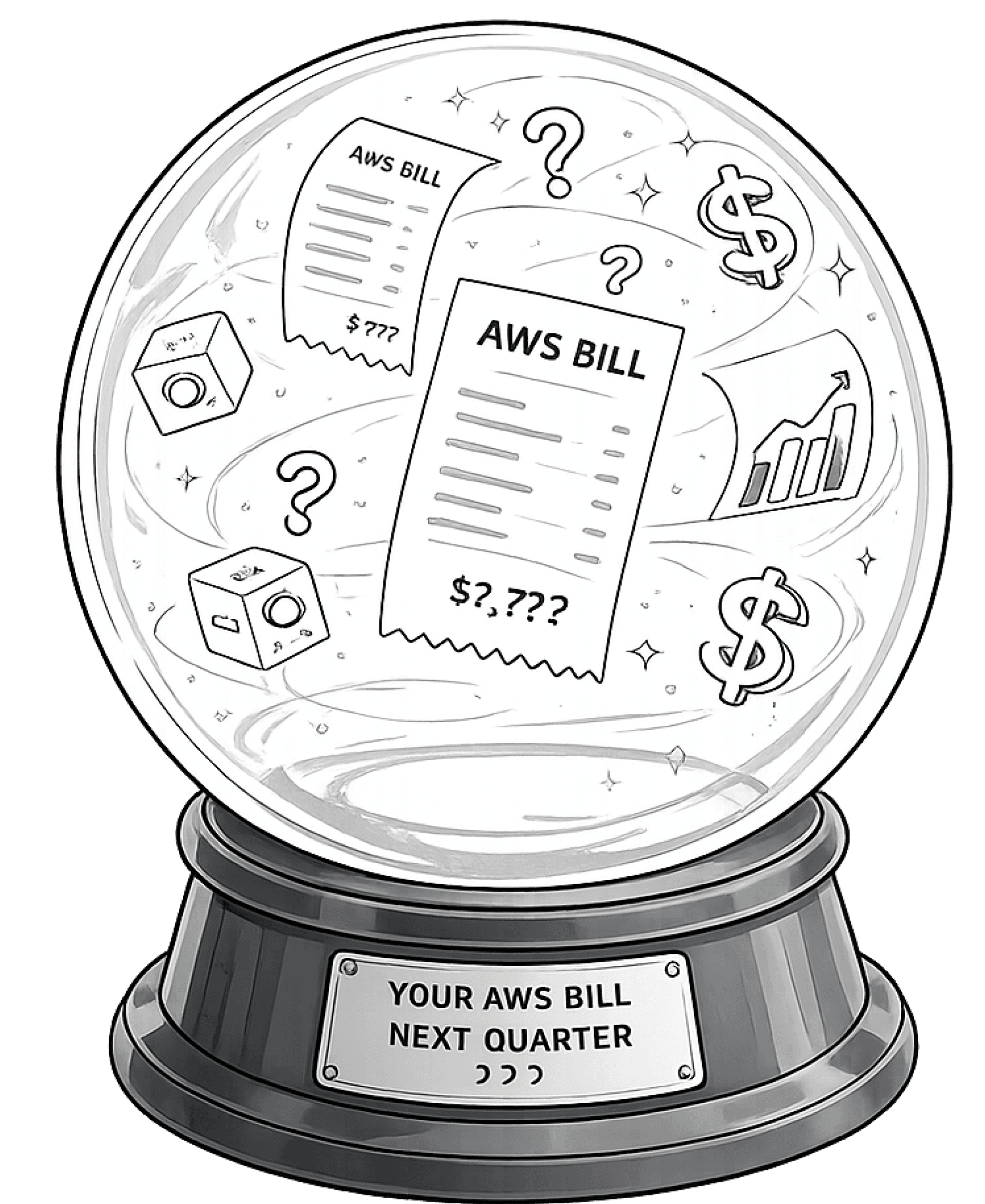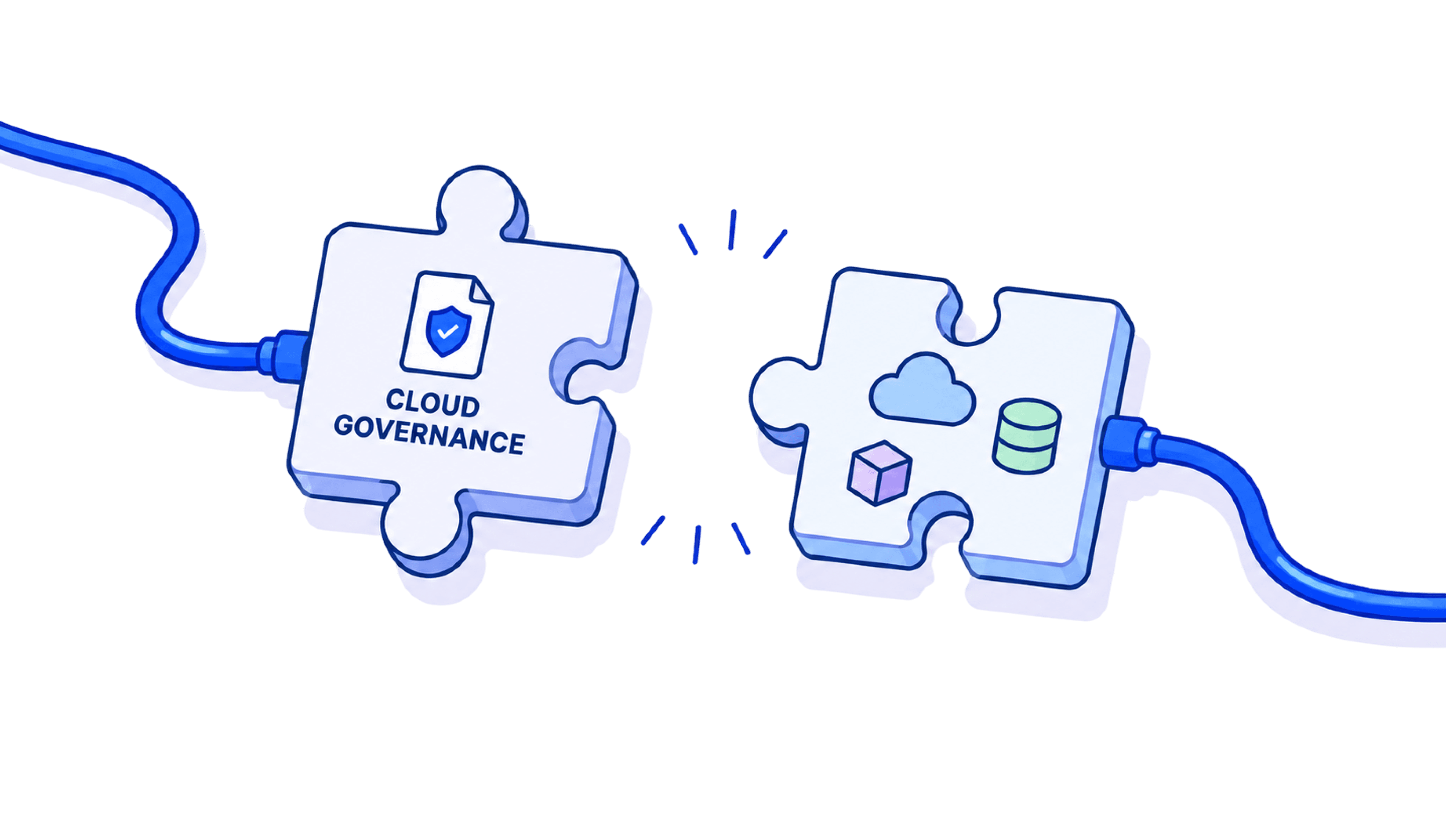
85% of organizations now say managing cloud costs is their single biggest operational challenge, ahead of security and software licensing, according to Flexera's 2026 State of the Cloud Report. That's not a small-organization problem or an early-stage-maturity problem. It's showing up at exactly the scale where 76% of large enterprises now spend over $5 million a month on cloud infrastructure.
The uncomfortable part is that most of these organizations aren't ignoring governance. They have policies written down, a FinOps team, maybe even a Cloud Center of Excellence. The gap isn't that governance doesn't exist on paper. It's that governance on paper and governance in practice have quietly drifted apart, and most teams don't notice the distance until a budget review forces the question.
This is a diagnostic, not a definition. If you want the full cost governance framework itself, that's covered here. This post is about the seven specific, checkable signs that tell you where the gap between policy and practice actually sits in your organization today.
Key Highlights
A cloud cost governance problem rarely looks like the absence of policy. It looks like policy that exists in a document but isn't enforced by any system that actually touches provisioning.
The clearest tell of a governance gap isn't the total spend number; it's whether different teams give different answers when asked how much a specific service costs.
Tagging policies that aren't measured against a compliance rate function as guidelines, not governance, regardless of how detailed the policy document is.
AI and agentic workloads are the newest and fastest-growing blind spot: 58% of organizations now run generative AI as a cloud service, up from 50% a year ago, often faster than governance processes built for traditional infrastructure can keep up.
Sign 1: No One Can Name Who Owns a Given Resource's Cost
Ask who owns the cost of a specific S3 bucket or compute cluster, and if the honest answer takes more than a few seconds or ends in "let me check," that's the gap. Resources without a current, accountable owner don't get reviewed, don't get right-sized, and don't get deleted.
They just accumulate cost indefinitely because nobody is positioned to make a call on them. This is exactly the pattern behind orphaned storage and forgotten staging environments: not malicious neglect, just an ownership structure that never got maintained as teams reorganized.
Sign 2: Budget Conversations Happen After the Invoice, Not Before Provisioning
Real cloud cost governance operates at the point of decision, not the point of reporting. If the first time anyone discusses a budget threshold is during a monthly finance review, weeks after the spend already happened, governance is functioning as an audit process rather than a control process.
The distinction matters: an audit tells you what went wrong after it's too late to change it, while the guardrails covered in cloud budget enforcement actually intervene at the moment a provisioning decision is made.
Sign 3: Tagging Compliance Is Aspirational, Not Measured
Almost every organization has a tagging policy. Far fewer can state their current tagging compliance rate as a specific number. If nobody can answer "what percentage of our resources are correctly tagged right now," the policy exists as a suggestion, not a governance control, since anything unmeasured tends to decay silently.
Tagging compliance rate is one of the core metrics covered in our cost optimization metrics guide, and it's frequently the single metric that most accurately predicts whether every other governance effort will actually work.
Sign 4: Different Teams Get Different Answers to "How Much Do We Spend on X?"
This is the fastest diagnostic on this list. Ask engineering, finance, and a team lead the same question, "What did we spend on the recommendation service last month?" and if you get three different numbers, that's not a rounding error.
It's a sign that cost data isn't flowing through a single, trusted source. A cloud spend governance program that can't produce one consistent answer to a basic question hasn't solved the underlying visibility problem yet, an issue covered in more depth in our guide to normalized multi-cloud cost visibility.
Sign 5: Policy Exists Only in a Document, Never in a System
A governance policy that lives in a wiki page or a slide deck is a statement of intent, not a control. The organizations with real cost governance have moved the substance of that policy into systems: provisioning rules, admission controllers, automated budget alerts, rule-based cost allocation like the approach covered in AWS Cost Categories.
If your policy would need someone to have read and remembered it correctly in order to be followed, it isn't governance yet, it's a training document.
Sign 6: Nobody Reviews Cost Decisions on a Cadence, Only When Finance Escalates
Governance that only activates reactively, when a spend spike is big enough to get finance's attention, isn't really governance, it's incident response wearing governance's name. The organizations that stay ahead of this run a lightweight version of cost review monthly rather than annually, the same recurring cadence described in the final step of a proper cloud cost analysis framework. Without that rhythm, every governance conversation starts from a position of already being behind.
Sign 7: AI and Agentic Workloads Are Provisioning Faster Than Anyone Can Govern Them
This is the newest sign on this list, and it's growing the fastest. 58% of organizations now run generative AI as a cloud service, up from 50% just a year earlier, and agentic workloads in particular can provision compute, storage, and API calls autonomously, without a human in the loop at the moment of the decision.
Governance frameworks built around human-initiated provisioning weren't designed for this pattern, which is why cost governance for GenAI workloads has become its own distinct discipline rather than an extension of existing policy. If your governance program hasn't been updated to account for autonomous provisioning specifically, this is very likely where the next surprise line item comes from.
Where to Start
You don't need to fix all seven at once, and trying to usually stalls the whole effort. The highest-leverage starting point is almost always Sign 3 and Sign 4 together, measuring tagging compliance and confirming a single source of truth for spend, since every other sign on this list depends on having accurate, attributable data first. Ownership, proactive budgeting, and AI governance all get meaningfully easier once that foundation is in place.
If you're recognizing more than two or three of these in your own organization, that's a normal place to be, and also the right time to build the ownership and measurement foundation before the gap widens further.
Get a free cloud cost assessment and we'll map which of these seven signs show up in your environment specifically, and what closing the gap actually looks like for your infrastructure.