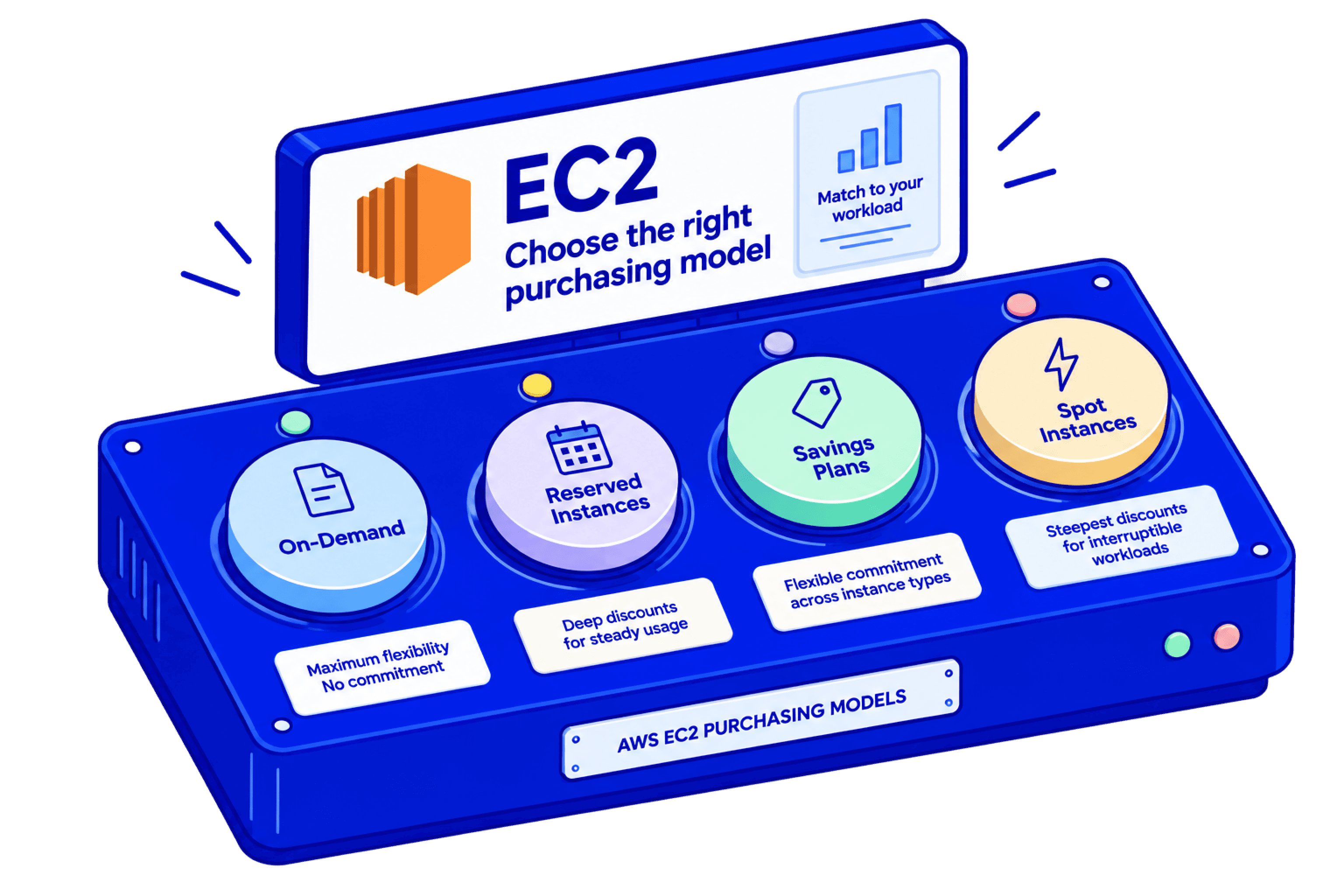
EC2 usually accounts for the largest single line item on an AWS bill, and most EC2 cost optimization guides jump straight to "use Reserved Instances" without explaining when that's actually the wrong call. The bigger lever isn't picking one pricing model; it's matching the right model to each workload's actual behavior.
Key Highlights
EC2 cost optimization depends on matching four distinct purchasing models, On-Demand, Reserved Instances, Savings Plans, and Spot, to workload predictability and interruption tolerance, not defaulting to one model across an entire fleet.
Reserved Instances and Spot Instances solve opposite problems: RIs reward long-term predictability with a stable discount, Spot rewards interruption tolerance with the deepest discount available on the platform.
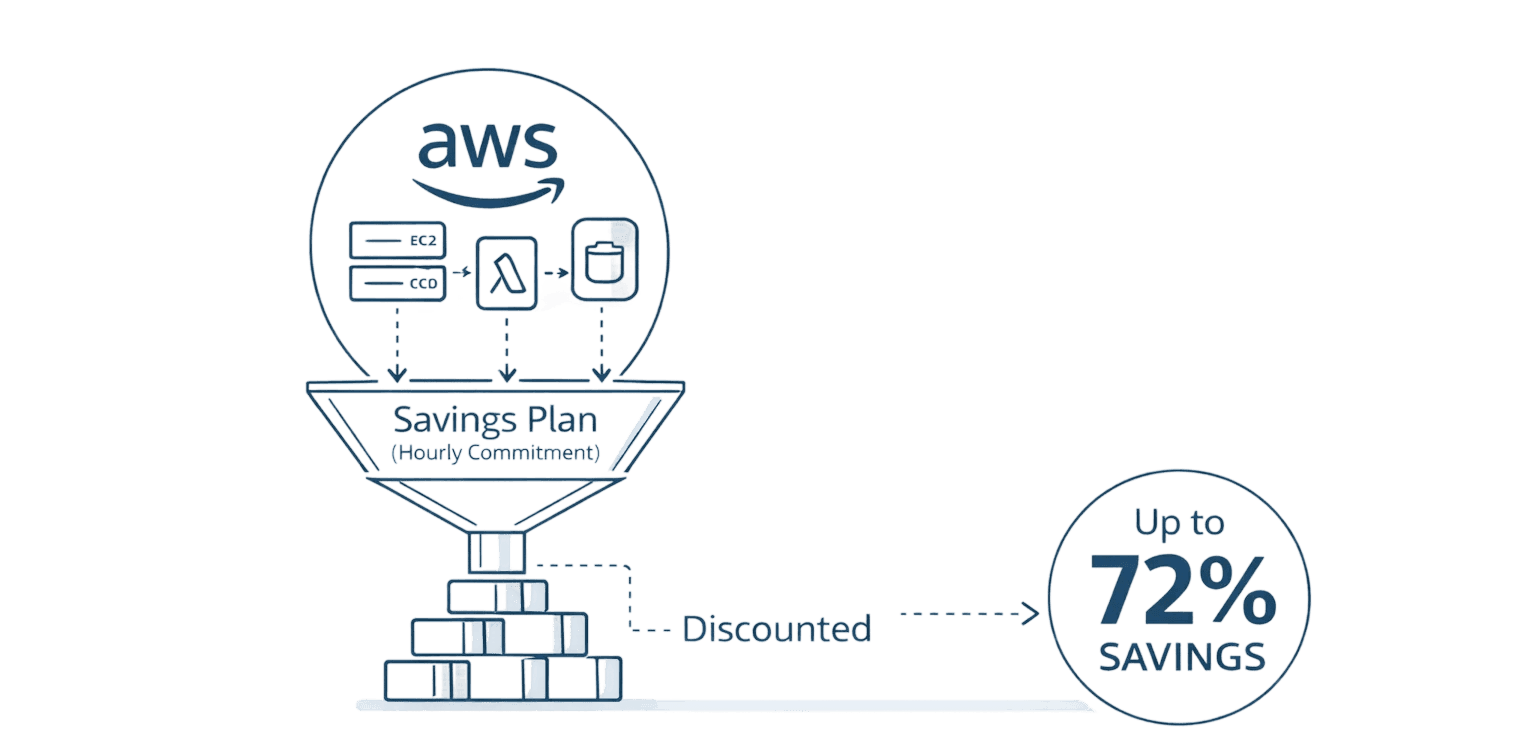
Savings Plans offer a middle path, a flexible commitment to a dollar amount rather than a specific instance configuration, trading some discount depth for the ability to shift instance types freely.
The most common EC2 cost optimization mistake isn't picking the wrong model; it's running 100% Spot on workloads that can't actually tolerate interruption, or 100% On-Demand on workloads stable enough to have earned a discount months ago.
What Are the Core EC2 Cost Optimization Purchasing Models?
AWS offers four ways to pay for EC2 capacity, and EC2 cost optimization starts with understanding what each one actually trades off: On-Demand (maximum flexibility, no commitment, highest per-hour price), Reserved Instances (a one- or three-year commitment to a specific instance configuration, in exchange for a deep discount), Savings Plans (a flexible dollar-amount commitment that applies across changing instance types), and Spot Instances (access to AWS's spare capacity at the steepest discount available, in exchange for accepting interruption).
When Should You Use Reserved Instances for EC2 Cost Optimization?
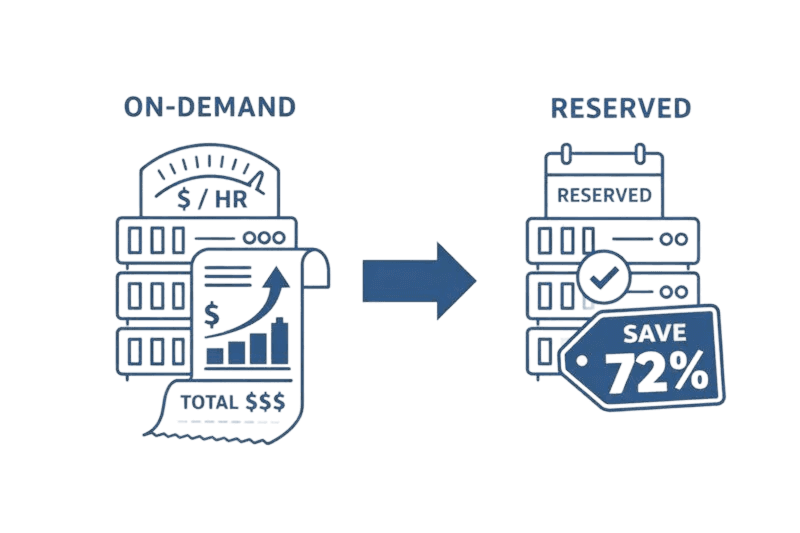
Reserved Instances make sense specifically for workloads with genuinely predictable, steady usage, a production database, a baseline web tier that doesn't fluctuate much. AWS advertises savings of up to 72% for eligible EC2 Reserved Instances compared to On-Demand pricing, but that discount only pays off if the reserved capacity actually gets used consistently across the full term; an RI purchased against a workload that later shrinks or gets decommissioned becomes a sunk cost, not a saving.
How Do Savings Plans Change EC2 Cost Optimization Decisions?
Savings Plans solve the rigidity problem Reserved Instances create. Instead of committing to a specific instance family, size, and region, a Savings Plan commits to an hourly spend amount, and the discount applies automatically as usage shifts across eligible instance types.
This makes Savings Plans a better fit for workloads that are predictable in aggregate spend but not necessarily fixed in exact configuration, a common pattern as teams migrate between instance generations or adjust sizing over time.
When Is Spot the Right EC2 Cost Optimization Choice?
Spot Instances offer the deepest discounts on EC2, up to 90% off On-Demand pricing, by using AWS's spare capacity that can be reclaimed with roughly two minutes' notice. That makes Spot an excellent fit for stateless, fault-tolerant workloads, batch processing, CI/CD jobs, rendering, data analysis, and a poor fit for anything that can't gracefully handle sudden termination.
The strongest EC2 cost optimization architectures don't run pure Spot even for tolerant workloads; they blend a small On-Demand or Reserved baseline with Spot capacity layered on top, so a capacity reclaim event degrades gracefully instead of taking a service down entirely.
How Do You Combine These Models Into One EC2 Cost Optimization Strategy?
The strongest EC2 cost optimization outcomes come from blending models by workload, not picking one company-wide. A typical mature setup: Reserved Instances or Savings Plans covering the stable baseline load, Spot handling burst and batch capacity, and On-Demand reserved for genuinely unpredictable or short-lived needs.
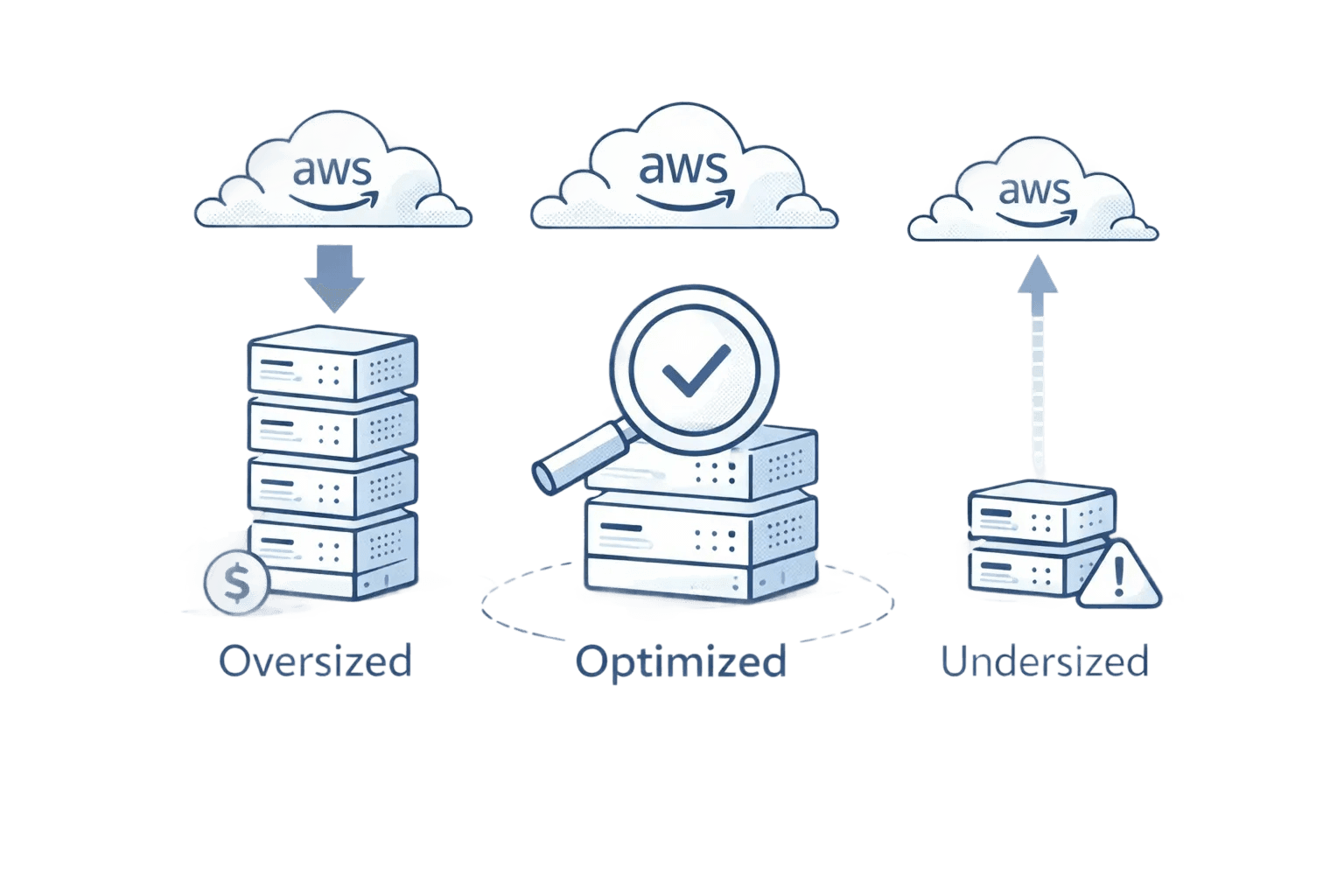
Getting this mix right depends on accurate utilization data first- the same foundation covered in rightsizing before you commit to any purchasing model, since a purchasing decision made against an oversized baseline just locks in the waste at a discount instead of removing it.
How Does EC2 Cost Optimization Fit Into the Bigger Picture?
EC2 is usually the largest cost category, but it's rarely the only one. The broader discipline of cost optimization across cloud infrastructure covers how EC2 decisions interact with storage, networking, and database costs, since an EC2 purchasing decision made in isolation can shift cost pressure onto a connected service instead of actually reducing it.
Where Does Opsolute Fit In?
Choosing between On-Demand, Reserved, Savings Plans, and Spot requires knowing which workloads are genuinely stable and which aren't, information that lives in utilization history, not the invoice. Opsolute connects EC2 billing data with the infrastructure context behind it, so a purchasing-model decision is grounded in actual workload behavior instead of a guess applied fleet-wide.
The Bottom Line
EC2 cost optimization isn't about finding the single best-discounted purchasing model; it's about matching four different models to workloads that behave differently, and revisiting that match as workloads change instead of treating a purchasing decision as permanent.
Want to know which EC2 workloads are actually stable enough for a commitment? Book a 30-minute demo and see how Opsolute connects utilization data to real purchasing decisions.
FAQ
What is EC2 cost optimization?
EC2 cost optimization is the practice of matching AWS's EC2 purchasing models, On-Demand, Reserved Instances, Savings Plans, and Spot, to actual workload behavior, so each workload runs on the pricing model that fits its predictability and interruption tolerance.
Should I use Reserved Instances or Savings Plans for EC2 cost optimization?
Reserved Instances offer deeper discounts for a fixed instance configuration and work best for genuinely stable workloads. Savings Plans trade some discount depth for flexibility across instance types, a better fit when usage is predictable in aggregate but not fixed in exact configuration.
Is it safe to run production workloads on Spot Instances?
Only if the workload is genuinely fault-tolerant and architected to handle interruption gracefully. Most mature EC2 cost optimization setups blend a small On-Demand or Reserved baseline with Spot capacity, rather than running pure Spot even for tolerant workloads.
What's the biggest mistake teams make with EC2 cost optimization?
Applying one purchasing model across an entire fleet instead of matching each workload individually, either over-committing to Reserved Instances on workloads that later change, or running Spot on workloads that can't actually tolerate interruption.