Most healthcare IT teams are flying blind too, just with higher stakes. They watch the monthly AWS or Azure bill climb from 80,000 dollars to 300,000 dollars as new digital health services launch, but when someone asks what is driving that growth, and whether any of it creates compliance exposure, the honest answer is usually "we are not entirely sure."
That uncertainty is the real risk. You are rightsizing instances without confirming whether they touch protected health information. You are shutting down an "idle" dev environment that turns out to hold a stale copy of patient records. Cloud cost optimization done carelessly in healthcare does not just risk overspending. It risks a compliance violation or a breach whose cost dwarfs whatever the optimization saved.
This guide covers how to cut healthcare cloud waste without weakening the encryption, access controls, or audit trails that HIPAA and patient trust depend on.
Key Highlights
Cloud waste hit 29 percent industry-wide in 2026, the first rise in five years, driven largely by workloads that are hard to forecast, including AI (Flexera 2026 State of the Cloud Report).
Over 39 percent of healthcare organizations report exceeding their cloud budgets, largely from a lack of structured cost governance.
Healthcare data breaches remain the costliest of any industry: an average of 7.42 million dollars per incident in 2025, the 14th consecutive year at the top (IBM Cost of a Data Breach Report 2025).
Mature cloud governance can realistically cut healthcare cloud costs 20 to 40 percent without touching compliance controls.
Tagging that separates PHI-bearing resources from everything else is the single practice that makes both cost control and compliance auditing possible at once.
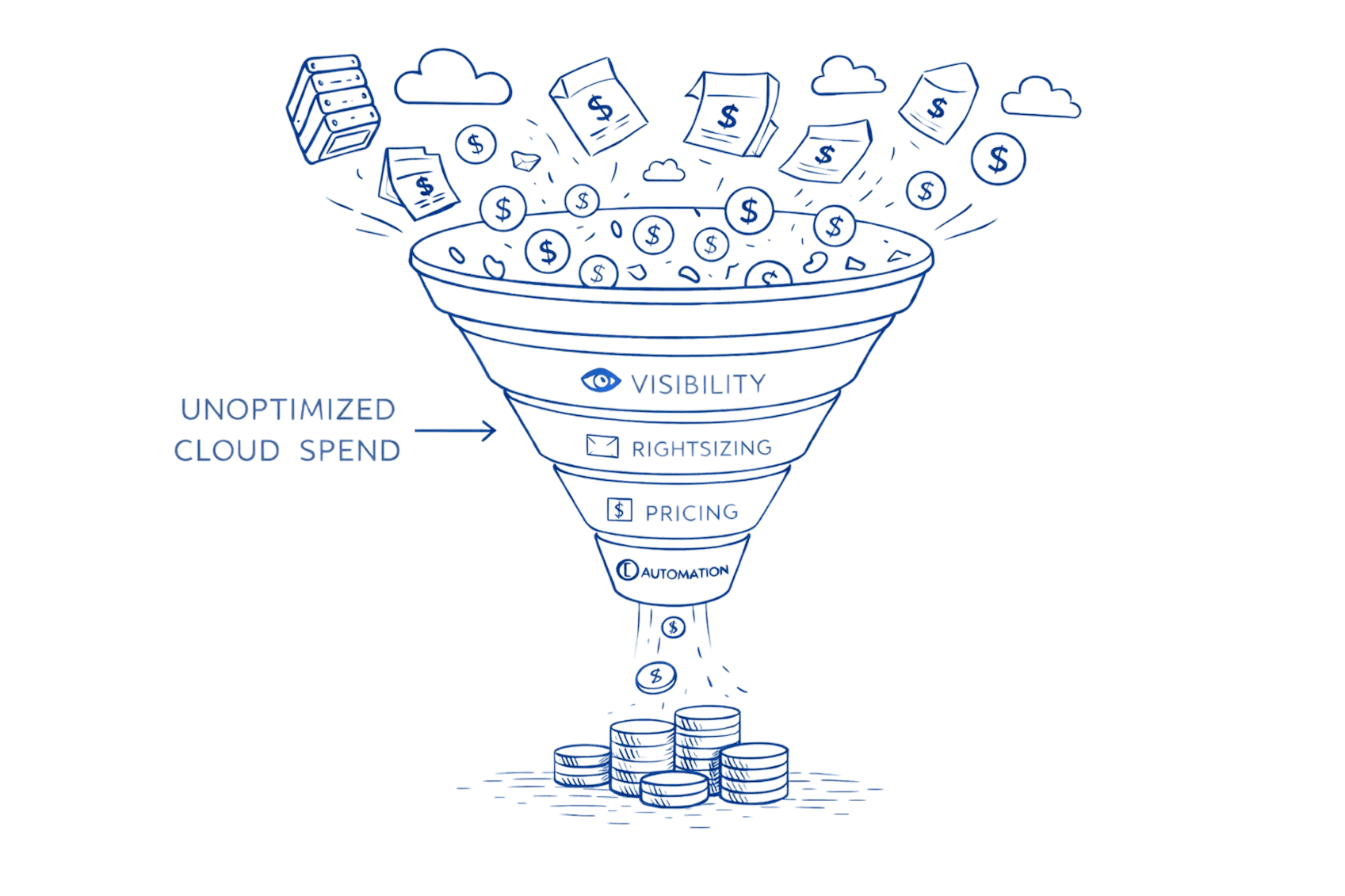
Before cutting anything, the first step is knowing exactly what you run and where patient data lives within it. That groundwork looks the same as anywhere else, just with a stricter tagging taxonomy. Our guide to cloud cost allocation methods covers the mapping process, and it is the right place to start.
Cloud Waste in Healthcare: Why Costs Behave Differently
Healthcare cost drivers differ from a typical SaaS environment. Imaging and genomic data cannot simply be deleted after 90 days, since retention rules often mandate keeping records for years.
Workload predictability is inconsistent: EHR systems run on steady demand suited to reservations, while telehealth and patient portals spike unpredictably around seasonal illness or a single large clinic going live. And compliance overhead- encryption, redundant logging, network segmentation- is a legitimate cost, not a target for elimination.
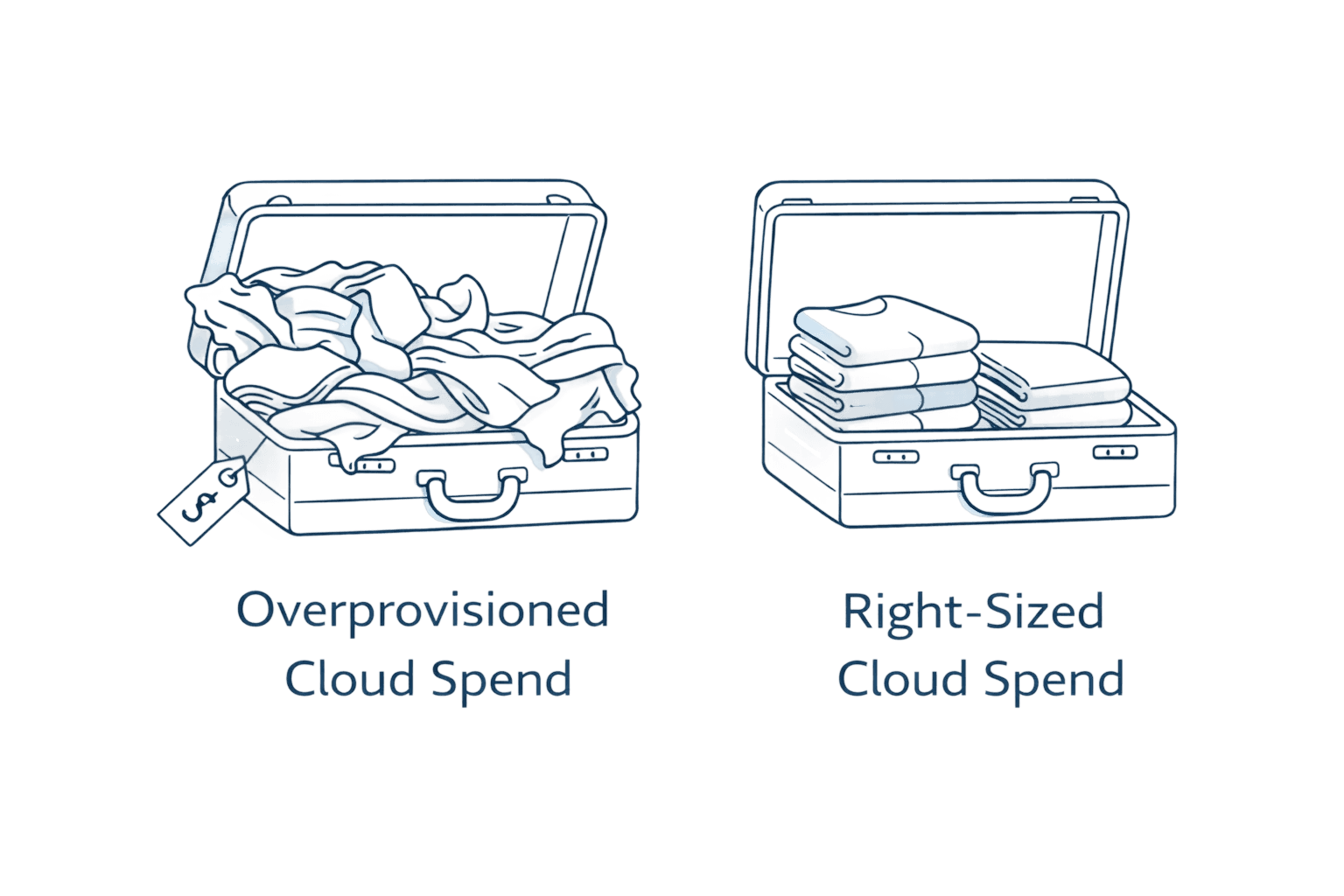
Cloud waste in healthcare tends to come from a specific set of sources: over-provisioning "to be safe" around compliance (which does not actually improve security), duplicate systems left over from mergers or legacy migrations, data sitting in expensive storage tiers long after it should have moved, and shadow IT from clinical pilots nobody formally decommissioned.
Healthcare Cloud Cost Optimization: Rightsizing, Auto-Scaling, and Commitment Discounts
Rightsizing is the fastest lever, but validate any downsizing against P95 latency and queue depth for clinical systems, not just average utilization, since averages hide the spikes that matter most in a hospital setting.
For dynamic workloads like patient portals, auto-scaling that responds to real demand works better than static sizing, with generous scale-down cooldowns so a temporary lull does not trigger a drop right before the next spike.
Reserved instances and savings plans can cut compute costs up to 75 percent for steady-state systems like core EHR infrastructure, but commit against your minimum sustained footprint, not seasonal peaks, and let auto-scaling absorb the rest.
Spot instances suit non-critical, interruption-tolerant work like batch analytics on de-identified data, never anything patient-facing. See our cost optimization in cloud computing guide for the full rightsizing methodology.
Storage Tiering for Medical Imaging and Records
A three-tier lifecycle policy handles most healthcare storage well: standard storage for actively referenced data, infrequent-access tiers for older studies still occasionally pulled, and deep archival storage for anything rarely accessed but still under a retention requirement.
The savings between tiers can exceed 70 percent for the same data. The one healthcare-specific caveat: periodically test restore times from archival tiers against real clinical need, since a 12-hour restore for an urgently needed scan is a policy failure. Our S3 cost optimization playbook covers the tiering setup.
Cost Allocation, Cloud Cost Governance, and HIPAA Compliant Cloud Cost Optimization
Cost allocation through tagging by department, environment, and data sensitivity (PHI-bearing versus not) does double duty in healthcare: it enables chargeback reporting, and it is often the fastest way to identify which resources need the strictest controls during an audit. An untagged resource for cost purposes is very often untagged for compliance purposes too. Our cloud cost governance guide covers building a policy that holds up under both.
A few compliance rules should shape every cost decision: any tool with visibility into PHI-adjacent resources needs a signed BAA, full stop. IAM should follow least privilege as a cost practice as much as a security one, since broad permissions let anyone spin up expensive resources unreviewed.
Data residency requirements limit which regions you can move workloads to, regardless of price. And audit logging is a cost line item worth keeping, not cutting, since it also supports cost anomaly detection.
The financial case for taking this seriously is stark: IBM's 2025 report puts the average healthcare breach at 7.42 million dollars, still the highest of any industry despite falling from 9.77 million the year before. No optimization program saving a few hundred thousand dollars a year is worth trading for even a small increase in that risk.
AI, Telehealth, and Multi-Cloud Cost Optimization for Healthcare
AI-driven diagnostics and clinical decision support run on GPU infrastructure that is expensive and often provisioned without the review discipline applied elsewhere. Treat it as its own cost discipline: spot instances for interruption-tolerant training, scheduled jobs during low-demand windows, and rightsizing based on actual utilization.
Telehealth traffic is inherently unpredictable and better served by auto-scaling headroom than reserved capacity. In multi-cloud environments, the real risk is fragmented visibility, not provider pricing; centralized monitoring is what makes it workable. See our multi-cloud visibility guide for building that view.
FinOps KPIs Worth Tracking
Cost per patient encounter or service line, storage cost per terabyte by tier, reserved instance coverage, tagging accuracy rate, idle resource percentage, and forecast-to-actual variance. Our 11 FinOps metrics guide covers the framework these build on.
The Bottom Line
The technical playbook for healthcare cloud cost optimization is largely the same one any industry uses. What differs is the discipline: every decision has to be checked against data sensitivity and retention requirements before it is implemented, not after. Get tagging and governance right first, and the technical savings become both larger and safer.
That is the layer Opsolute is built to support, connecting cost visibility, tagging-based governance, and forecasting directly to your healthcare cloud environment. Talk to our team about a compliance-aware view of your healthcare cloud spend, or explore how Opsolute supports FinOps teams more broadly.
Frequently Asked Questions
Is cost optimization compatible with HIPAA compliance? Yes. Rightsizing, tiering, and waste elimination do not touch encryption or access controls. The two conflict only when cost cutting is applied carelessly, like disabling logging to save on storage, which should never be part of a legitimate plan.
What is the fastest, safest place to start? Tagging and cost allocation. It carries no compliance risk on its own and typically surfaces easy wins, like orphaned resources, within the first review.
Do cost optimization tools need a BAA? Yes, if they have any visibility into PHI-adjacent resources. Treat the absence of a BAA offer as disqualifying, not a minor gap.